Table of Contents
Changelog
- 2026-02-07
- Initial publication
Preface
It’s been over 5 years since I was nerd sniped in a way that triggered a deep dive into the world of shaving, personal grooming, body scaping and soap. It’s time to revisit the topic with a mega post.
This is a long one and covers a lot of ground. I’d recommend a cuppa, a comfy seat and something to take notes with while reading. Note: This post assumes you’re willing to lookup products in The List section, read resources linked in some sections, dive deeper where needed, etc.
This post is organized as something of a ‘brain dump’. There is no conclusion, just a lot of info grouped into sections you can hop around.
Advertising / Promos / etc
All of the products, etc in this post were purchased by me, for me and used by me. None of the brands, companies, humans creating the products, etc influenced my writing in any way.
Additionally… If something is shit, it’s shit and I’ll be blunt about it. If something is good, it’s good and I’ll be blunt about it.
This post is the culmination of years of research, testing, tuning and general nerding out. Nothing more.
Critical Info
It’s time to admit it: I’m afflicted by testosterone as a primary hormone.
I’m also 50% Greek by genetics. This means I have facial hair that’s thick, semi-dense and coarse. The kind of stuff that requires aggressive shaving kit and regular upkeep. These genetics also ensure I have A Lot of body hair.
The other 50% of my genetics is ‘European’ with more Irish than anything else. This means that the hair on top of my head and scattered across my body is very thin. The exact opposite of the hairs on my face.
Due to these facts, I have a huge problem at hand: I need totally different kit depending on where on my body I’m grooming. These ‘differences’ are also on opposite ends of the spectrum of needs which means I either have to put together multiple kits, make some serious compromises or get really creative. I’ve taken all 3 approaches and this post will get into these approaches, particularly in the Travel section.
Additionally:
- This post focuses heavily on DE safety razors. Other forms of razor are valid, even if I don’t like some forms of razor. I’ve tried to be as impartial as possible and admit what kit is not for me while providing any useful information I can put forth, even if the type of razor isn’t for me.
- If you’ve got thicker hairs, focus on the
Facial ShavesandBody Sculptingsections for my thoughts. - If you’ve got thinner hairs, focus on the
SkullandBody Sculptingsections for my thoughts. - The
Nose & Ear,Manmower,Straight RazorsandSafety Razorssections are written in a universal way and ’thickness of hair’ is not a meaningful factor or concern for these sections. - The
Travelsection directly addresses the conflicting nature of my grooming needs and provides good insight and info for those who have a similar problem to me: two very different types of hair that need grooming.
Prior Writings
Some of my prior writings on this topic are below. I’ve included this section so you can ‘go back in time’ to see how things have evolved for me if you desire.
Some of this information will be repeated here, some still relevant info will be skipped, some info is no longer applicable and some of the things mentioned are no longer available. Basically: it’s probably wise to skim / read these links if you want more information on this topic.
- Royal Hair Trimmer
- Henson Razor Mini Review
- Soap Updates
- Razors, blades, brushes
- Scary Shaves
- Personal Grooming
Electrics
I’m putting this first as it stands alone and I don’t want to be asked why I skipped information about electric devices. Thankfully I do have something more to say than ’not for me’.
In all honesty I’ve spent the last few years trying to find alternatives to electric devices. They require a lot more maintenance than most want to admit (ever cleaned a Braun electric razor head or Skull Shaver fully?), they are expensive to maintain (the blade costs…), their batteries cannot be replaced easily, if at all, and they are loud to my ears.
Basically I just don’t get along with electric devices used for grooming despite having purchased a Braun electric razor, Skull Shaver, beard trimmer and similar over the years.
However!
I know or have known (memory eternal) folk that could only use electric devices for medical reasons. Parkinson’s, extreme tendonitis, extreme carpel tunnel and more can cause major accessibility needs when it comes to the arms and hands. Additionally, I’m sure there are non-medical reasons that’d force a human to use some kind of electric deice.
Due to this: electrics have a place. They are important and I have no problem with them on the whole.
I even have two items to note regarding electrics.
I find the key to electrics is figuring out if you need a straight cutter style like a Braun Series 9 or circular cutter style like a Skull Shaver. For me I need a straight cutter style for my face and portions of my body while my skull and other areas need the circular cutter style. They have very different characteristics and your body will dictate which works best. Folk tend not to talk about this fact and few recognize this fact is why they love/hate a given electric device. I’ve talked to a lot of folk and this is a primary factor, even if nobody realizes it day to day.
Electrics can be very helpful when traveling. You don’t have to deal with as many variables or the ‘will I be allowed to have blades with me?’ type problems that pop up with non-electric options. I know a few folk who only use an electric for travel and it’s specifically to avoid silliness when it comes to travel bans on varied forms of grooming kit.
This rest of this post will ignore electric options and focus on non powered devices. I find they are simpler, are easier to maintain, and last longer than most humans will be alive.
Again: electrics are valid. However, I massively prefer non-electric options and electrics are not a topic I intend to explore.
Nose & Ear
Simply put: I grow hairier with age. Nose and ear hair have been the most problematic the last few years and I took to tweezing as I could never find a nose / ear hair trimmer I liked.
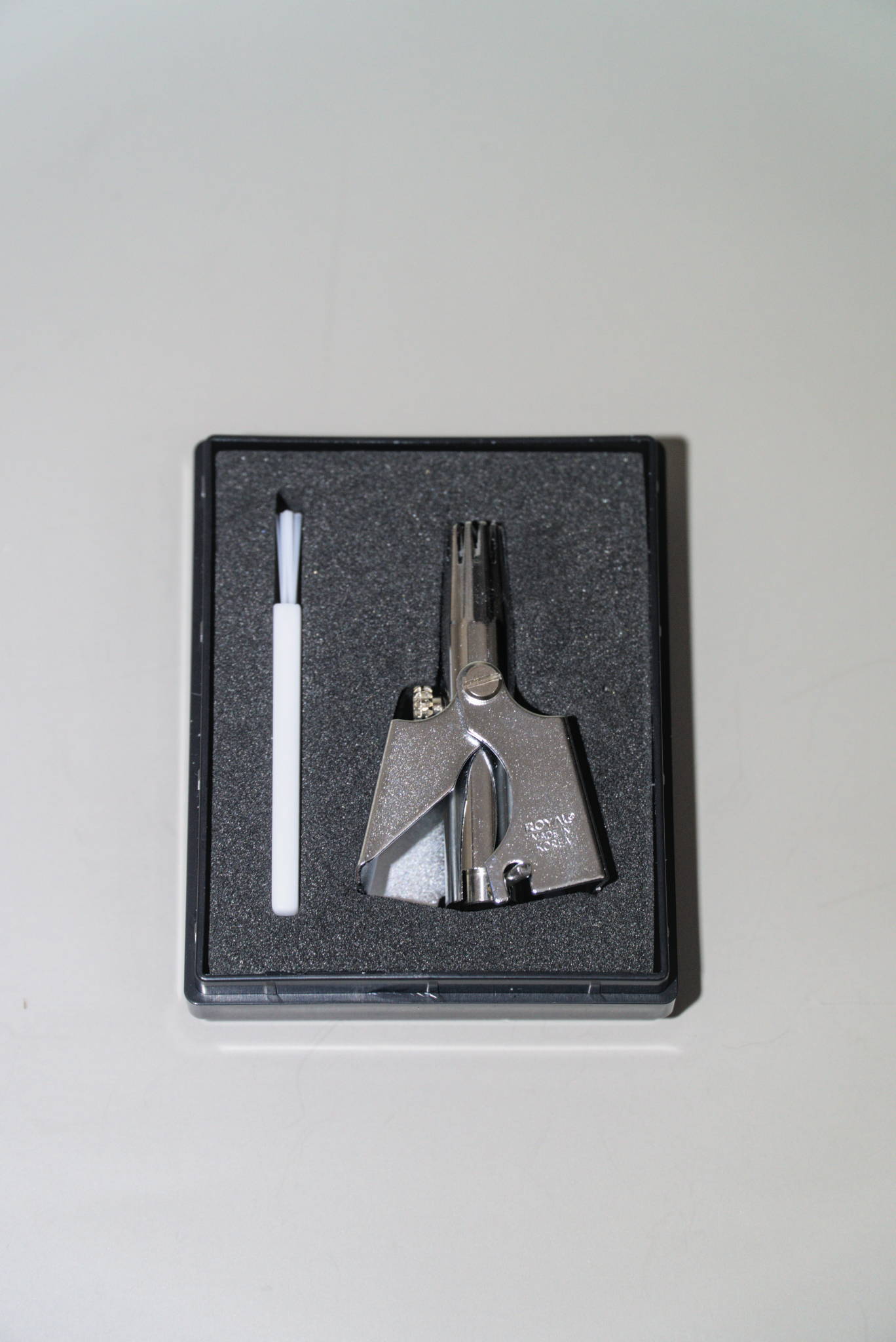
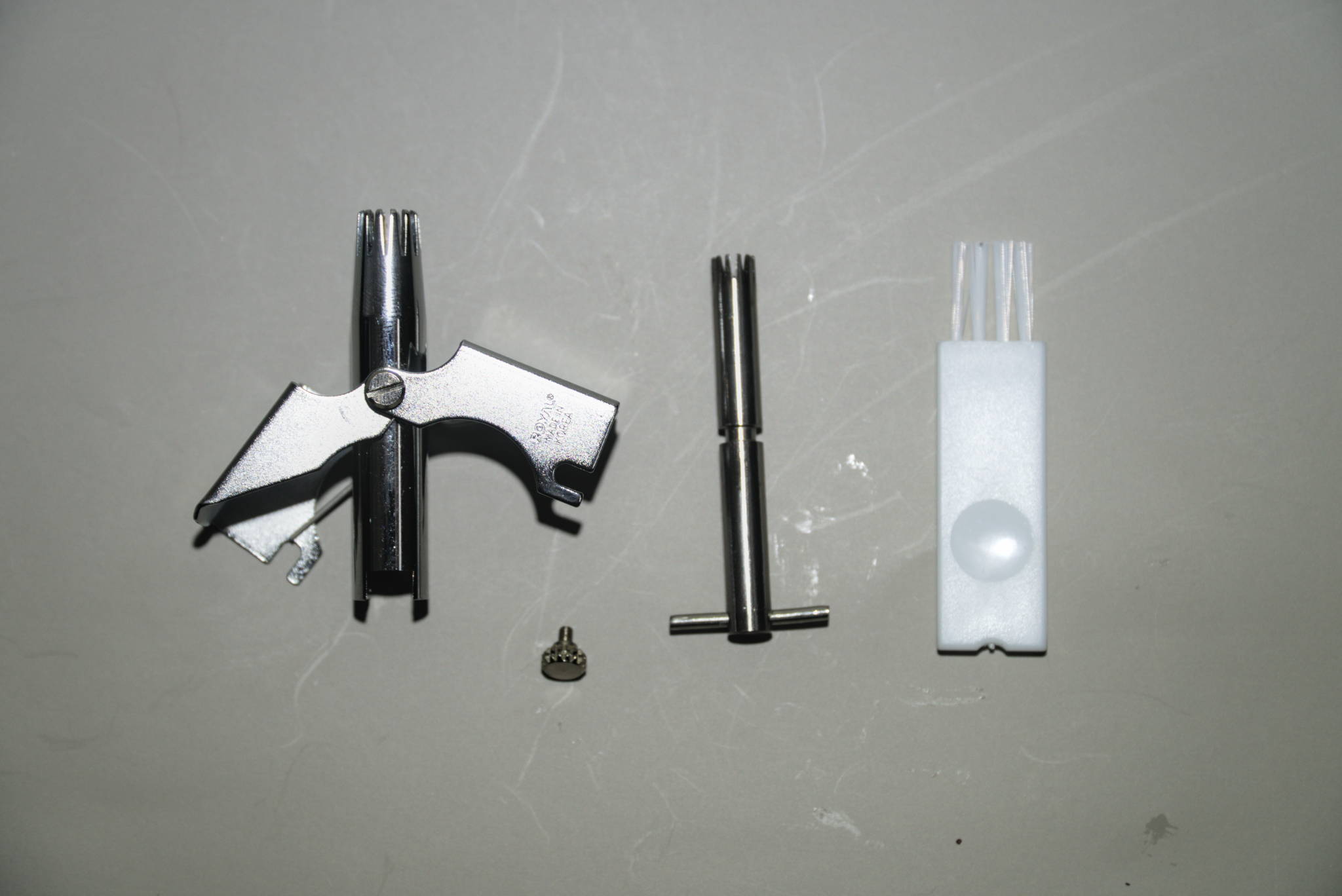
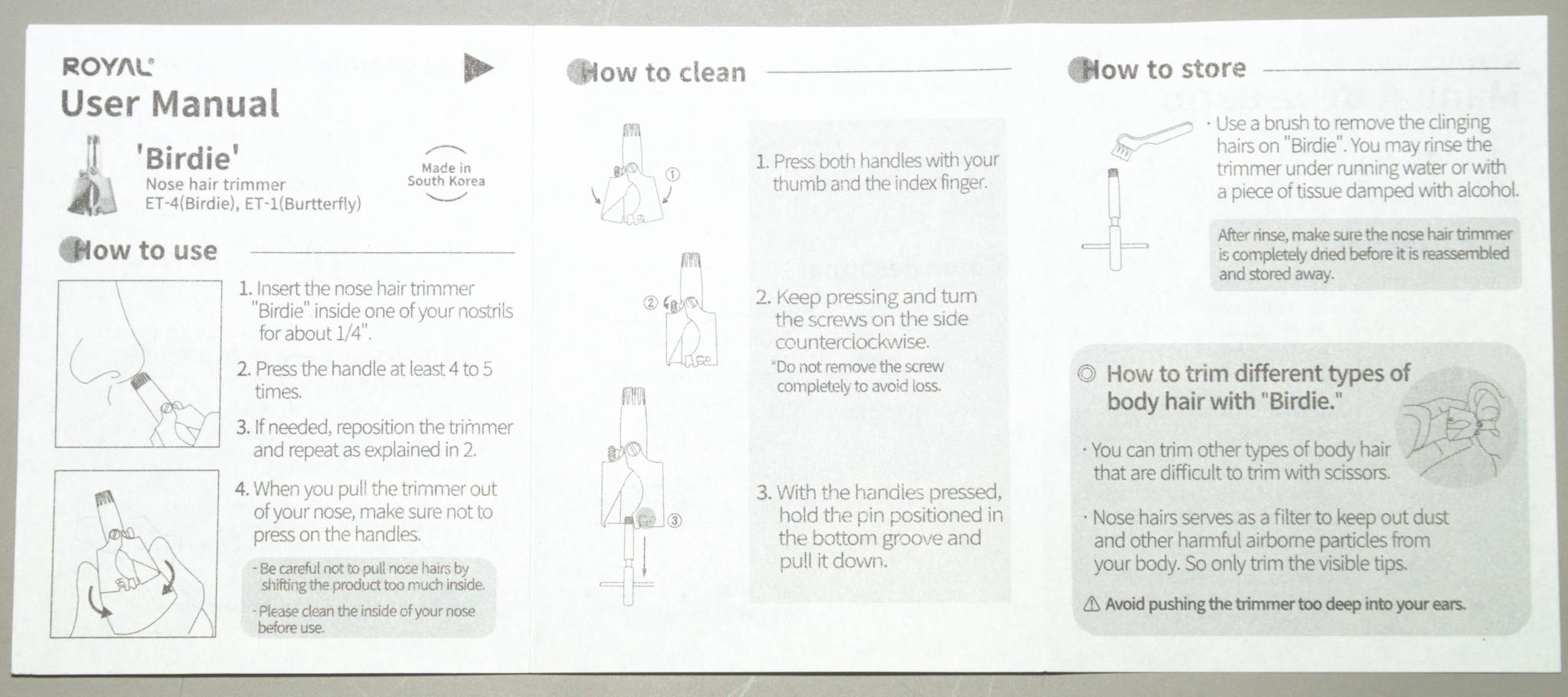
Thankfully I found an option that doesn’t involve plucking individual hairs, doesn’t need a battery and isn’t SUPER LOUD to my hearing. It can even fit into a small dopp kit if you’re taking a long trip that may require some upkeep.
Rather than repeat a large hunk of writing, I refer you to my post on the Royal Hair Trimmer. I wrote the linked post as part of my prep work for this post. The information is current and worth reading.
TLDR: The Royal Hair Trimmer is great for nose / ear hair trimming needs and is affordable. I highly recommend it.
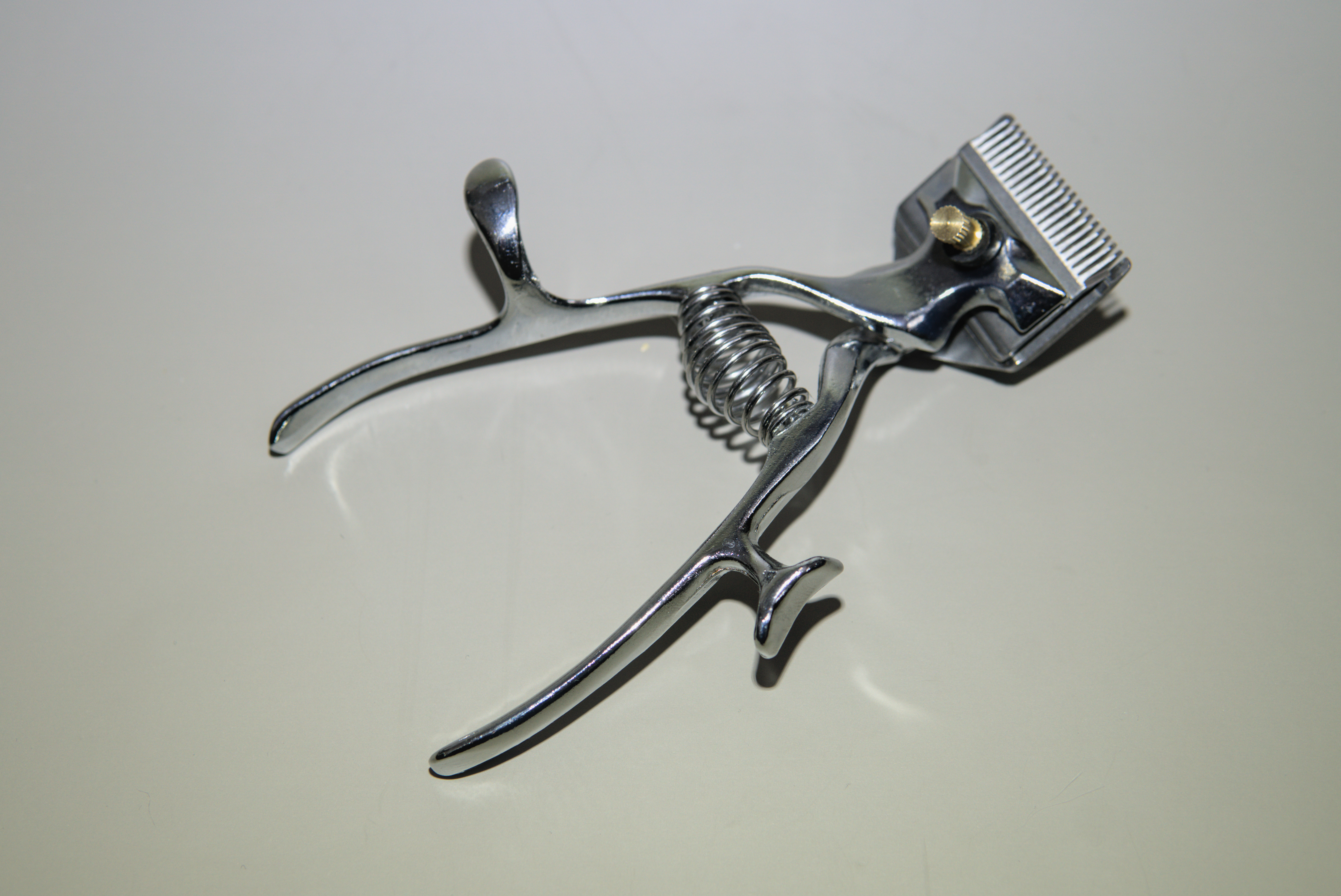
Manual Hair Clippers
As much as I want to lean into manual hair clippers fully… I can’t as of this writing.
They are usable, work well enough and, with time, technique can be developed to make them reasonably efficient. However, they exhausted my arm quickly and using them with the ‘off’ side of my head was a huge PITA. Basically right handed trimmers used on the left side of the head is not an easy task. It’s best to swap hands when trimming your own hair. Sadly I’ve not found an ambidextrous option or left handed option when it comes to manual hair clippers.
If I were to lean into this world further, I’d need both left and right handed clippers (they are handed) or ambidextrous clippers so I can flip/flop hands easily. I did a search for left handed and ambidextrous forms and… came up empty which I find to be a huge issue. I’m ambidextrous and have a lot of left handed friends. Using right handed manual clippers with the left hand is a lesson in pain and frustration. Don’t bother.
I’ll be frank: if I cannot find left handed forms of manual clippers, I’m unlikely to invest in building my technique or bothering. I have issues with my arms and my ambidextrous nature saved me a fuck ton of hassles, pain and strife over the course of my life. I don’t acquiesce when it comes to my ambidextrous needs so this is a non-starter for me until I find a left handed option.
I will make one concession on this topic (for now): beard trimmers. I will continue to use an electric beard trimmer to cut the hair on the top of my head to stubble length when necessary. The beard trimmer I have is light, easy to maneuver around my head and works well without the guard attachments. However, it is loud and I desire a non-electric option. Hopefully I’ll be able to update this post later with a left handed manual hair clipper option.
Manmower Trimmer
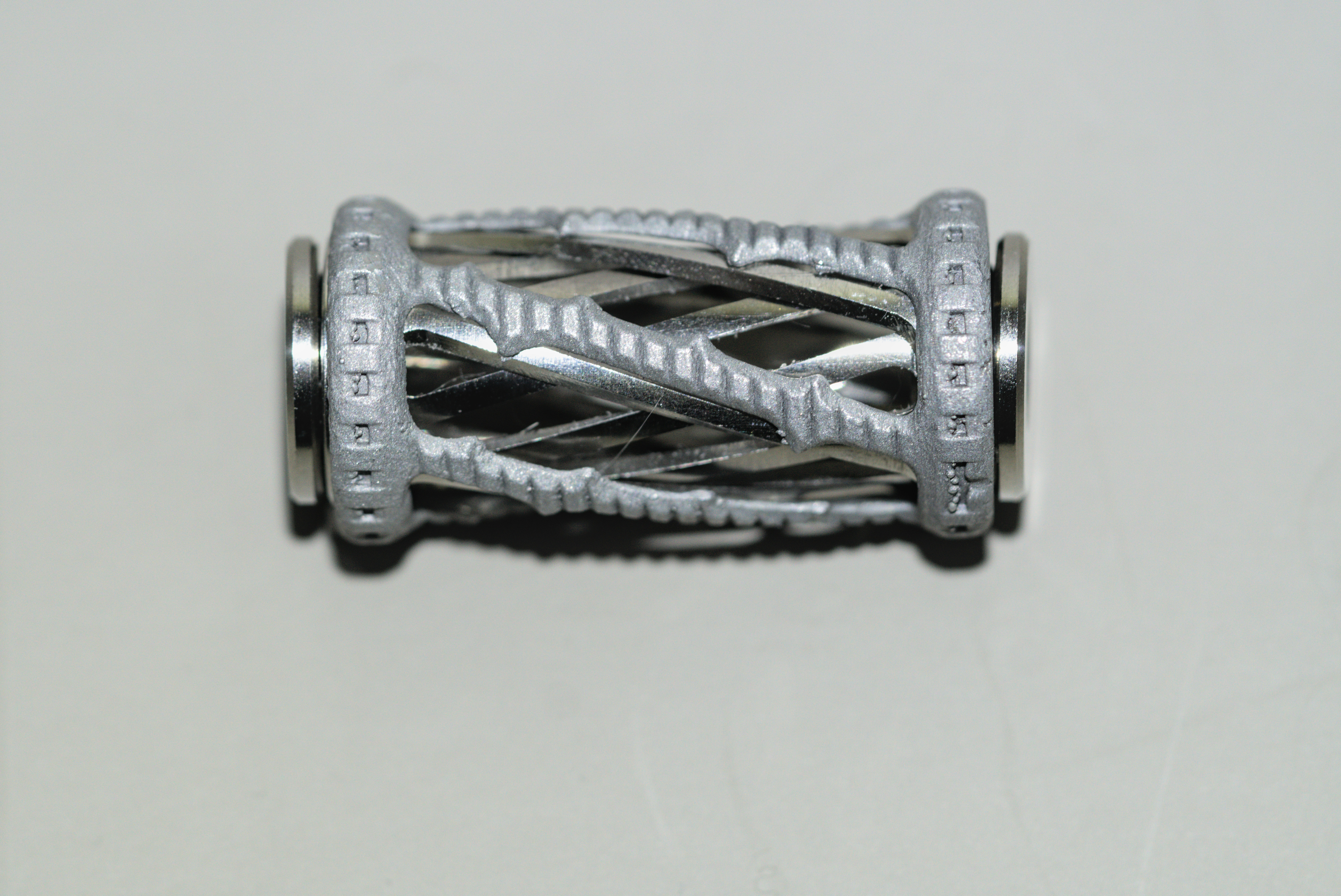
I’ve had a Manmower Mini (Metal) for awhile now and… I still haven’t quite sorted how to use this effectively. It does work. However, I just can’t seem to figure out how to make this work for my desires, needs, etc. I prefer a very close, ‘rough stubble’ length to my hairs if not fully shorn. For whatever reason I cannot seem to keep my hairs at this length with the Manmower. If I run it over my body for a bit then tap it on my hand, I get stubble and trimmings in my hand but… it’s far less than I’d expect. It’s as if I’m just not using the device effectively.
Due to this I contacted the company to ask for some additional detail since I can’t seem to find anything useful online. The below is the conversation I had with the folk behind Manmower.
I did have a question regarding the mowers, would you be able to help me? I’m trying to figure out how the adjustment works exactly. On the metal mini I can adjust the blade exposure with the 4 little notches but I’m having a hard time figuring out exactly how ‘blade exposure’ affects ‘shave’. It’s not clear to me.
The blade exposure / comb overhang relates to the aggressiveness and closeness of the mowing - to suit different hair length, hair growth directions, and thickness. Longer hair and more sensitive skin may be more liable to cause discomfort if the overhang is large, such that hair is pulled before cutting during use.
Is it safe to say that an increase in blade gap (more blade showing from under the guard) will results in a more aggressive, closer shave with the mower with longer hair and sensitive skin being better served by a less aggressive setup?
Actually from testing, the opposite. But it does depend on the user, as there are so many variables with skin/hair/sensitivity - so difficult to provide hard and fast rules. For example some people tolerate very little pulling, and with a longer length of hair between the edge of the comb and the cutting point (i.e. less aggressive using your terminology), there will be relatively more pulling.
This is the exact response I was afraid of: ‘it depends…’. I don’t fault them and I’m very happy they were honest about the fact results can (will?) be highly variable due to the sheer volume of ways the device can be used.
It also tells me that I’m likely the problem, not the mower.
For the time being, I strongly recommend the Manmower. However, note that it’ll take awhile to figure out how to use it properly for the results you desire. I’ll keep this section updated with any additional information I find in the future.
If you do have insights, recommendations, etc regaring the Manmower devices: please head to kemonine.info and send me a note via the contact form. I’d love to have additional insights that I can use to further develop this section.
Soap
‘Soap’ is a dense enough topic where someone could write a series of very long blog posts. I’m not that human and, frankly, I’m known to shave all but my face without any soap or lather. Seriously: I don’t bother unless the area I’m shaving isn’t submerged or pelted by a shower.
For the situations when I do need or want lather, I use simple shave soaps that contain bentonite clay. Years ago I switched to simple (read: cold process, small batch, non-chemical laden) bar soaps for all body washing needs. As part of that process I tried a number of shave soaps and quickly discovered I only really care about one thing: the soap needs to contain bentonite clay. Everything else, for me, is wholly secondary.
Bentonite is regarded as one of the key ingredients in a shave soap as it does a really good job increasing ‘slip’ so the shave feels smooth. All the shave soaps I preferred contained this ingredient. That’s it. I’m a very easy person to please when it comes to shave soap.
I currently buy shave soap from Chagrin Valley Soap & Salve and have no complaints. I’ll also use their “Dead Sea Black Clay” soap when traveling as it works for both whole body and shave needs for me, it even contains bentonite.
I have seen ’tallow’ mentioned as a key shave soap ingredient and a lot of boutique shave soaps are made with tallow. I’ve not walked this path but it is worth noting as I’ve seen it mentioned as an ingredient just enough to take note.
If you want to nerd out: soap is definitely an area deserving your attention.
Straight Razors
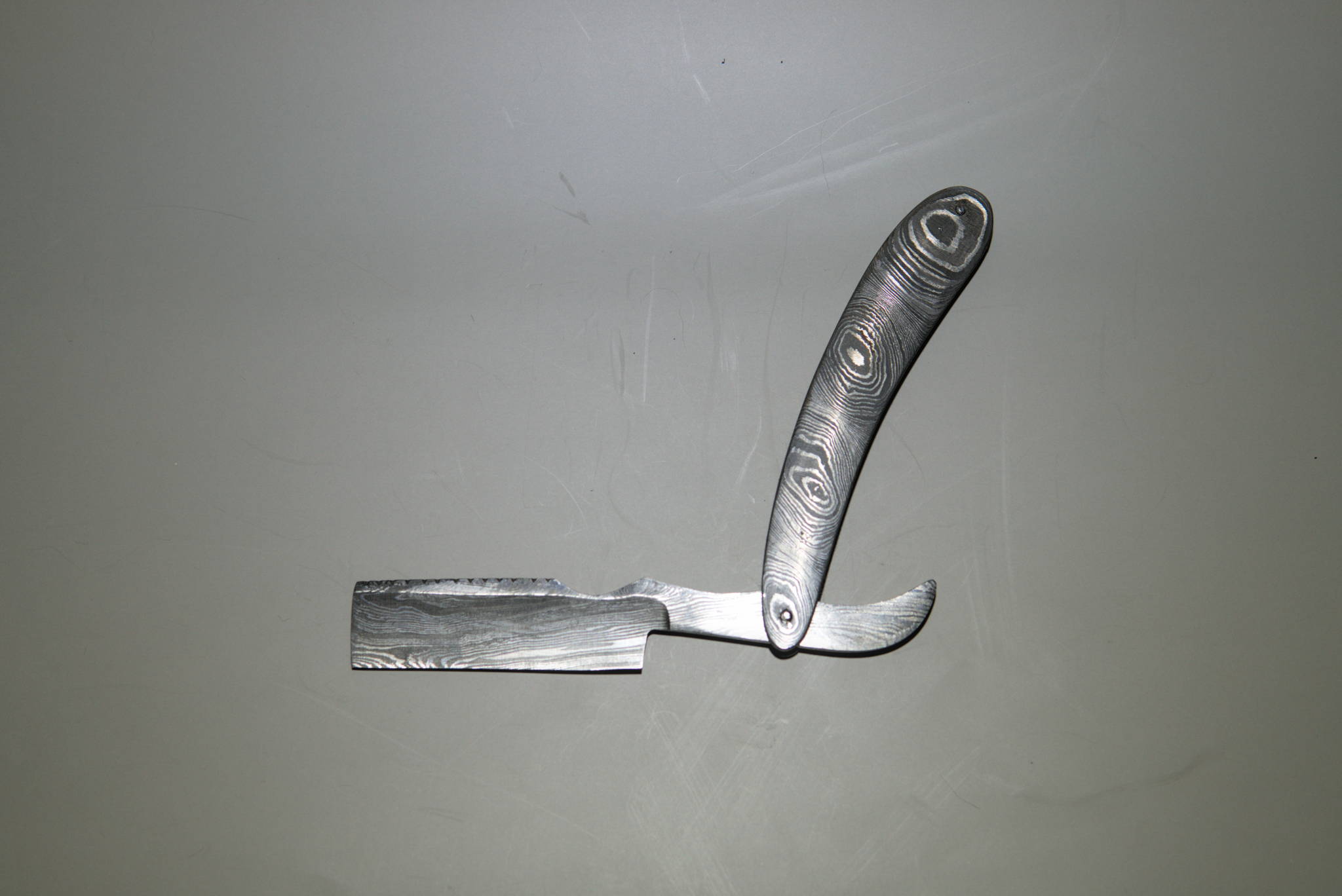
I have dabbled in the world of straight razors. Unfortunately for me, I have terrible fine motor control most days due to health issues. Shaving with most straight razors makes me anxious, even twitchier than normal and mildly scared I’ll chop a hunk of flesh off my person. I tend not to use these but I do keep a couple on-hand, just in case. There are even some scenarios where I find them ideal.
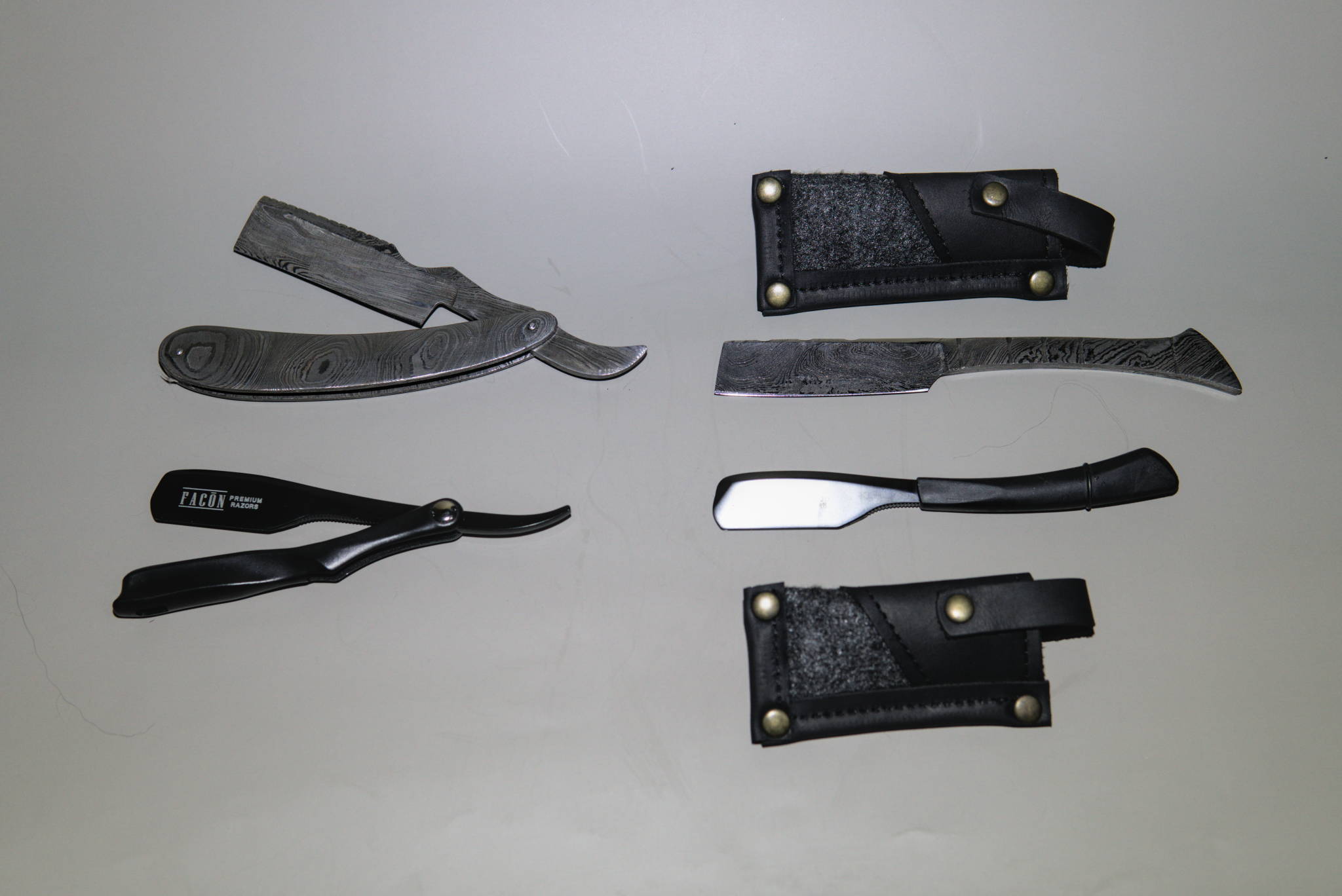
I have experimented with the following forms of straight razor
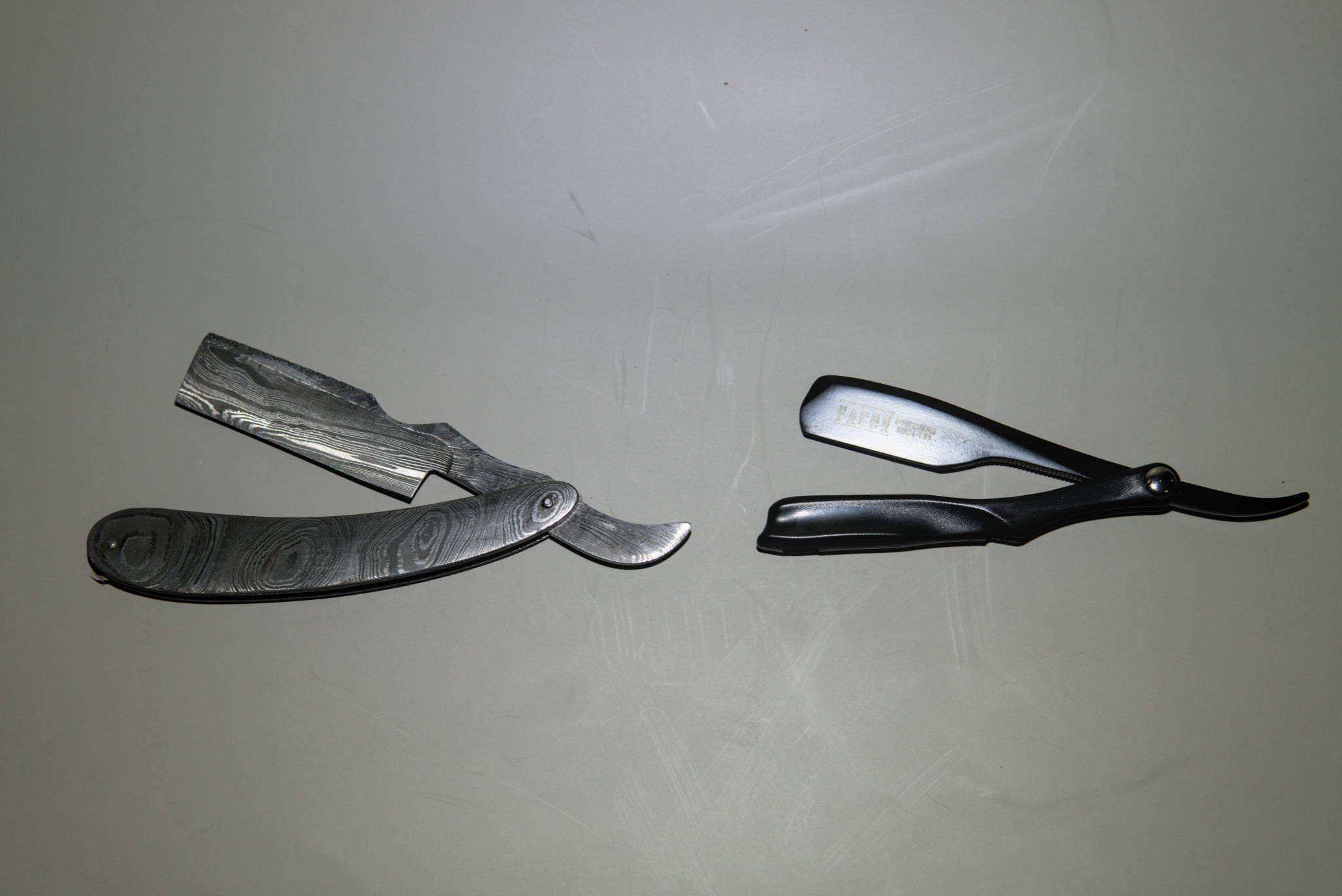
- Traditional folding
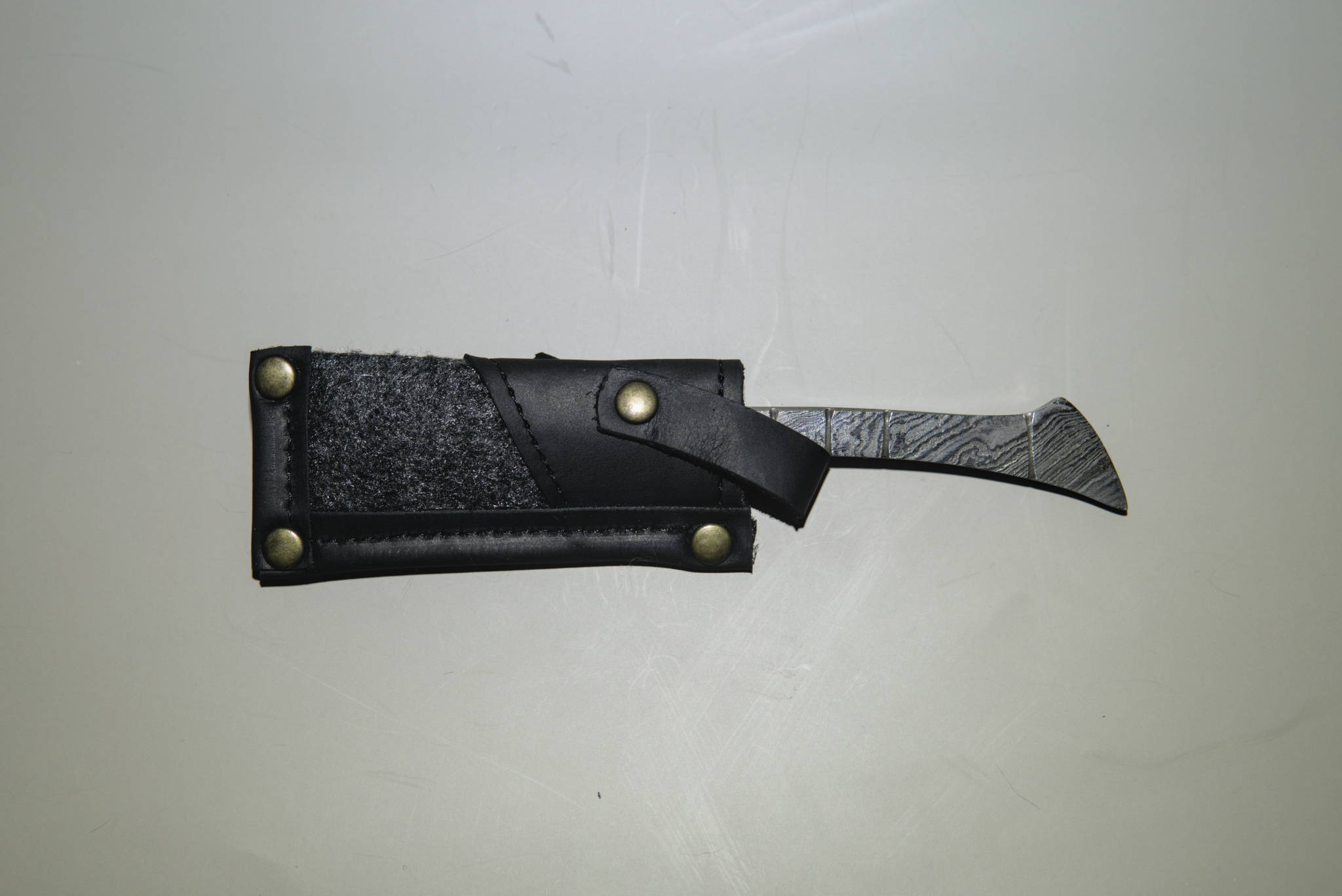
- Fixed handle (looks like a shortened, square butcher knife)
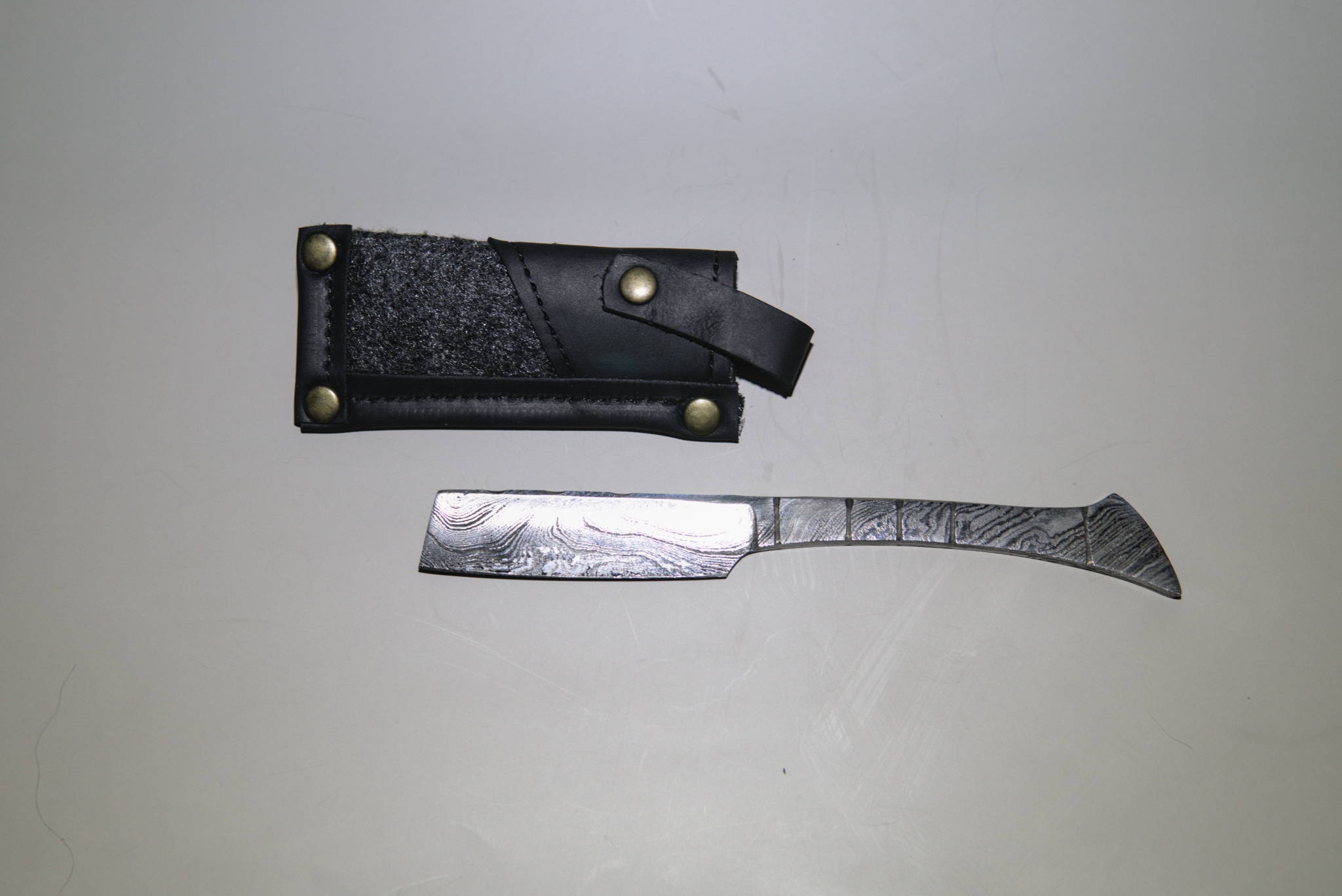
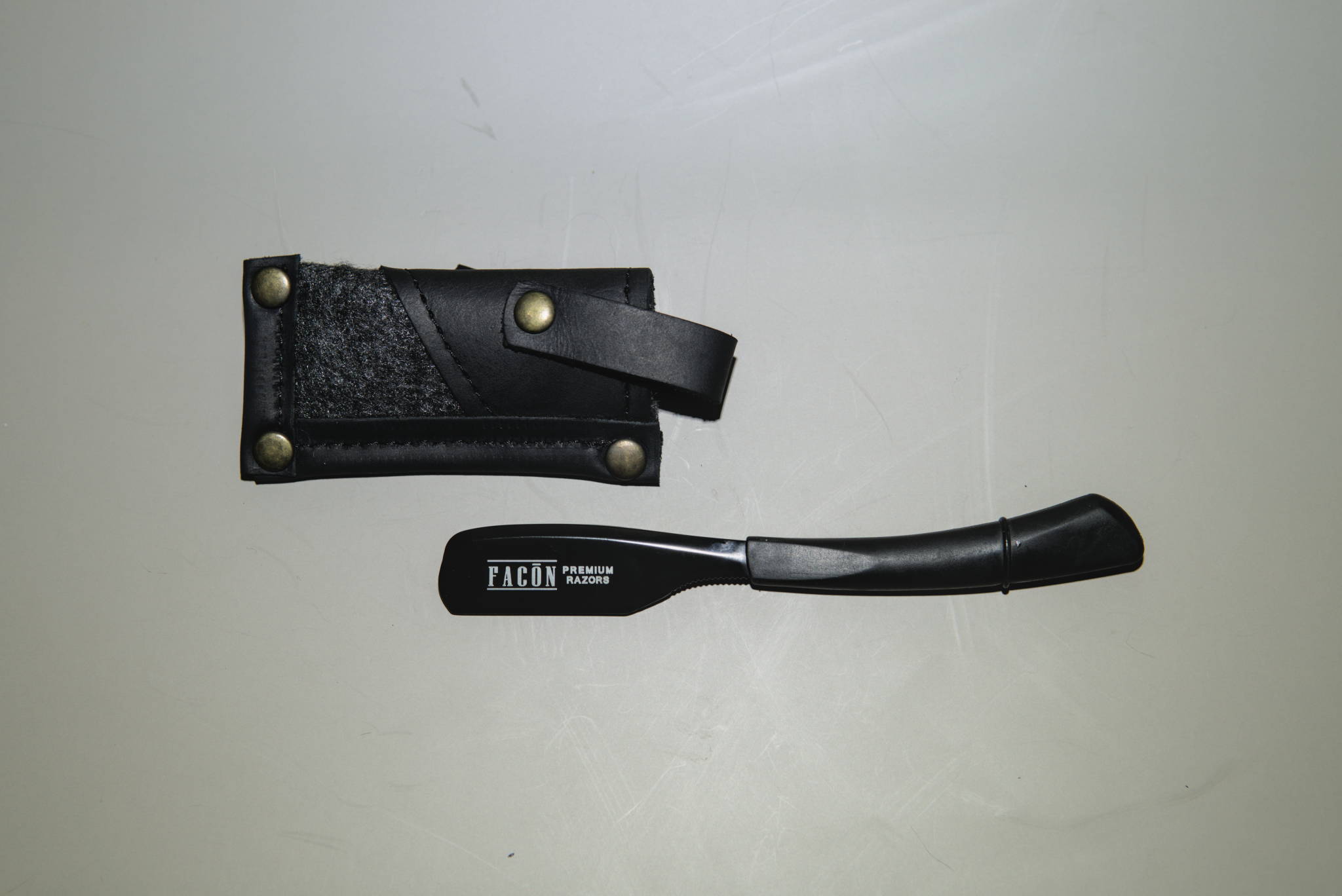
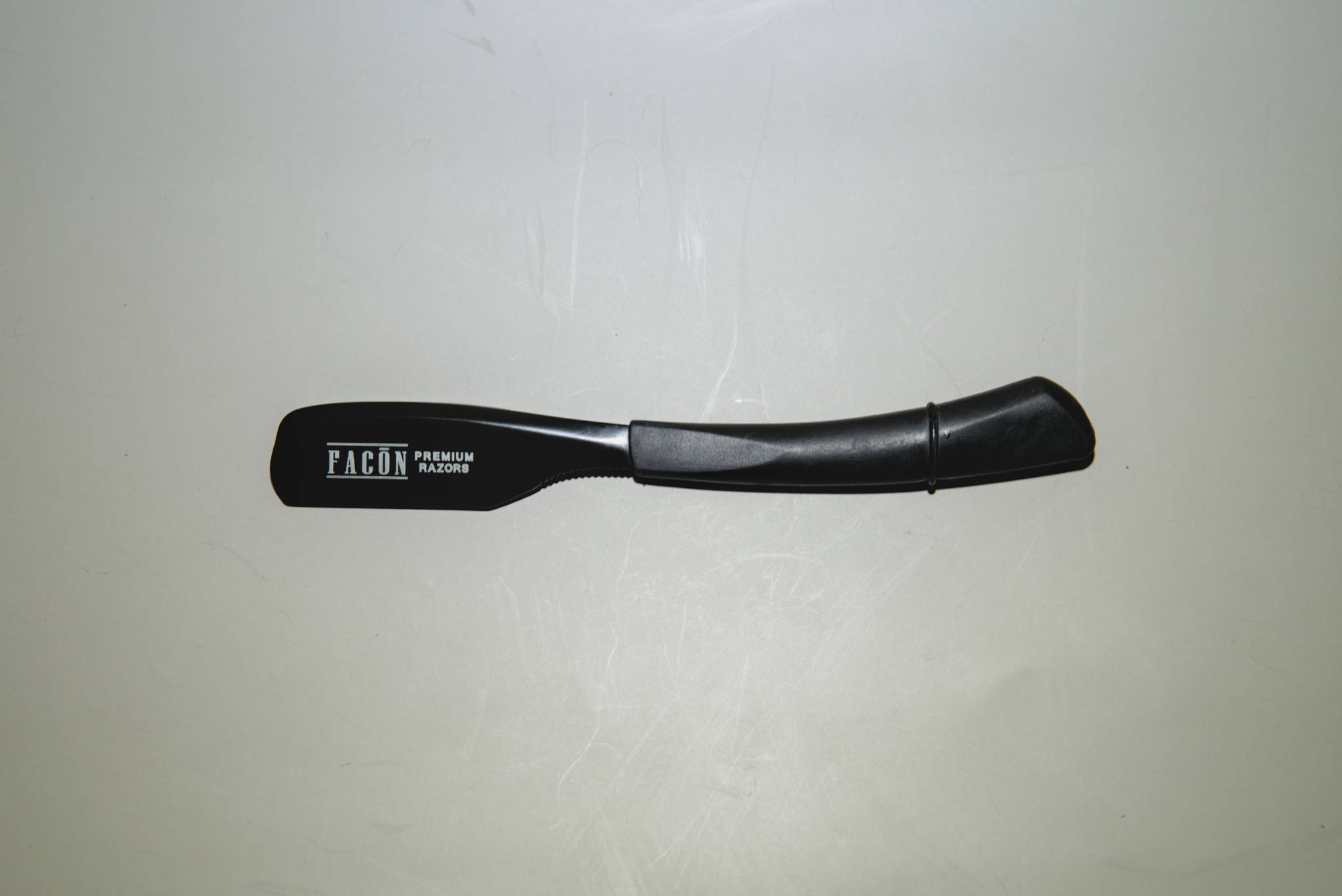
- ‘Minis’ that are not long and have a ring for holding your finger
- Fixed and replaceable blade forms of each of the above
I’d like to note the only straight razors I call out in The List section are an uncommon form as well as two good starting points for trying straight razors. Straight razors tend to be highly individual purchases and there are a dizzying number of choices available. It’s best to do some homework and buy a straight razor that fits with your needs and desires. I do strongly recommend buying a replaceable blade model first to ensure this is a path you want to go down before purchasing more expensive options.
The following sections layout my general thoughts and findings which will influence which razor you may want to choose.
Universal
There some big, universal considerations for straight razors:
- You cannot shave fast. It may not take ‘forever’ if you’re well practiced, but it’ll always be a longer shave than a DE or modern safety razor.
- These razors are not forgiving. If you fuck up, it will be bad and you may suddenly need medical attention.
- You can very easily carve a hunk of flesh from your body and / or create a giant gash that requires medical attention.
- Fixed blade setups will outlast you and likely multiple generations after you’re gone.
- These require regular sharpening, honing, etc to stay effective. Maintaining the blade and edge is important.
- You really need to practice and spend the time to develop your skill in order to achieve an effective shave.
- These are regarded as giving the closest possible shave.
- Practice can be done on the legs where the skin is thicker, more forgiving and has enough hair to help guide your technique as it develops.
Traditional Folding
Honestly, I cannot use a traditional, folding straight razor. My hands (both left and right) don’t like the grip. Every way I tried to hold the razor caused an increase in my tremors. I very quickly gave up on using this style straight razor as it’s just Not Safe for me.
This style is the typical folding straight razor you see everywhere in pop culture. They come in a ton of styles, materials, etc.
If you’re looking for a straight razor, consider this the most common option and a very appropriate starting point.
Fixed Handle
This style of straight razor I can get along with (mostly). I’ve successfully shaved with this razor style and, with practice, I could probably use one anywhere on my body as long as my health issues aren’t flaring.
This style is essentially a handle attached to a sharp, rectangular blade. Very boring but very good at shaving. This style is less common than the folding style but there are enough options available to make these a worthwhile consideration.
I don’t usually recommend this style as a starting point due to these being less common. I do recommend them to folk who may find folding styles difficult to hold and/or control.
Mini
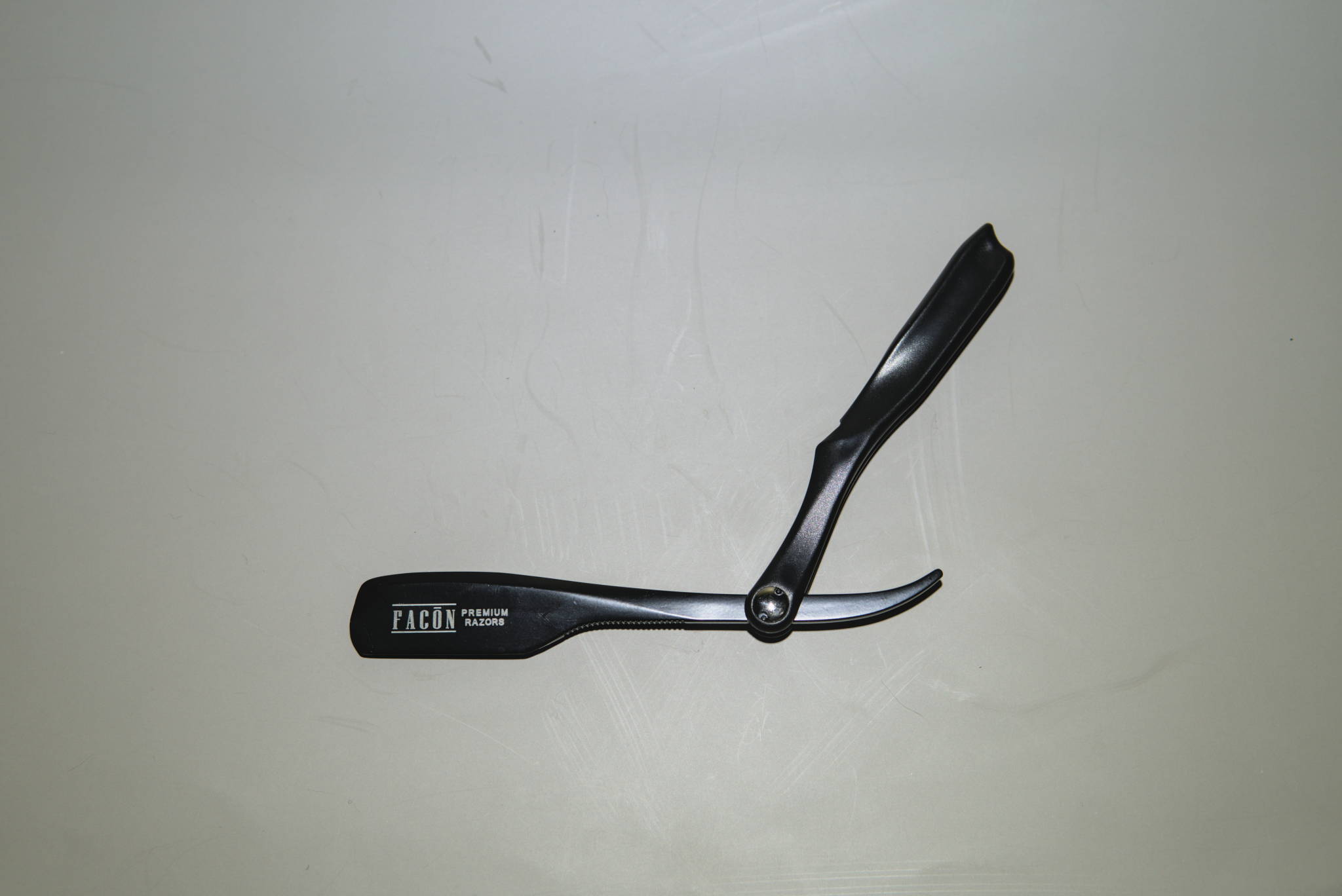
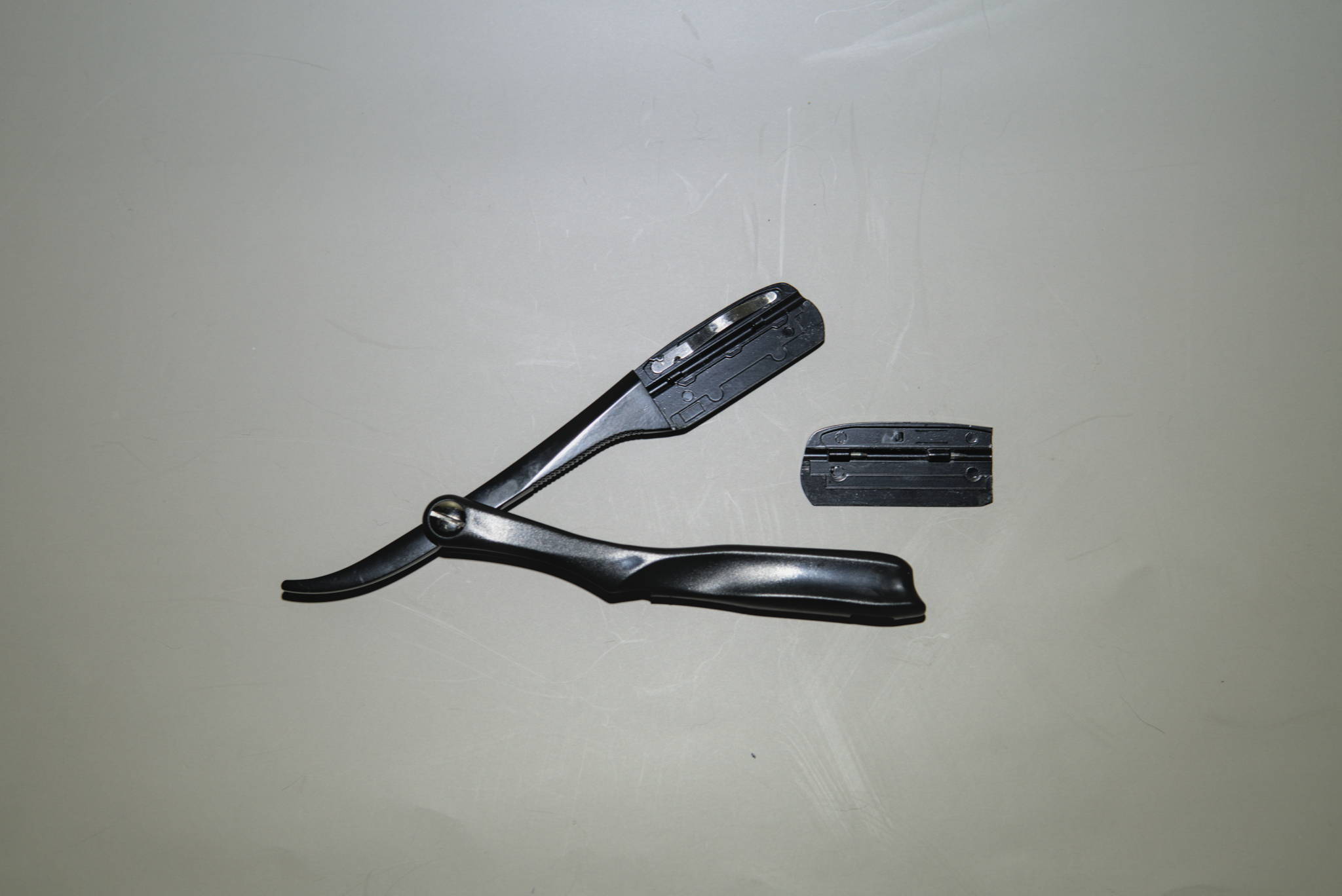
There are some mini ‘barber’ straight razors with finger rings available. You see these pop up from time to time and they almost always have replaceable blades. I bought one to try and I find it’s the easiest style of straight razor to use. I also like the fact I can snap a standard DE blade in half for use with the razor.
These are definitely worth investigating if you struggle with other styles of straight razor and are intent on finding a straight razor option that works.
I’d not recommend starting here as they aren’t commonly seen outside of barber and salon settings. Granted, those are key settings for use but also very different settings compared to when you’re shaving your own person.
Blades
Straight razors have two blade varieties that I’ve seen: fixed blades and replaceable blades. Fixed blades are like most knives and require regular stropping, honing and general upkeep. Replaceable blade straight razors are like any other razor, you can simply swap the blade with a new one when dull.
I tend to recommend folk start with replaceable blade models and then move into fixed blades at a later point. The upkeep of a fixed blade is non-trivial and generally requires learning how to strop and hone a blade properly. It can be done, but it’s a fairly large time investment.
Utility
There is one aspect of straight razors I don’t see mentioned often: they do not clog. This is a Big Deal for some scenarios and can provide a lot of utility.
There are times when I just don’t shave and days can easily turn into weeks or months of not shaving. This usually results in a dilemma: do I bother to spend the necessary time with clippers and a DE razor or do nothing and revert to my default state?
There is a 3rd option.
Given straight razors do not clog, I can skip the clippers and get right to shaving with a straight razor. The time commitment is usually less than clippers + DE razor. I find using a straight razor instead of clippers + DE a compelling consideration when I cannot simply shave a portion of my body with a DE razor (read: the hairs are too long for a DE razor). This isn’t perfect or always an option but when it is… I usually reach for my mini with replaceable blades. Especially for shaving legs, arms and similar areas where a straight razor is less difficult to use.
Safety Razors
Safety razors come in two forms: modern and DE.
Modern
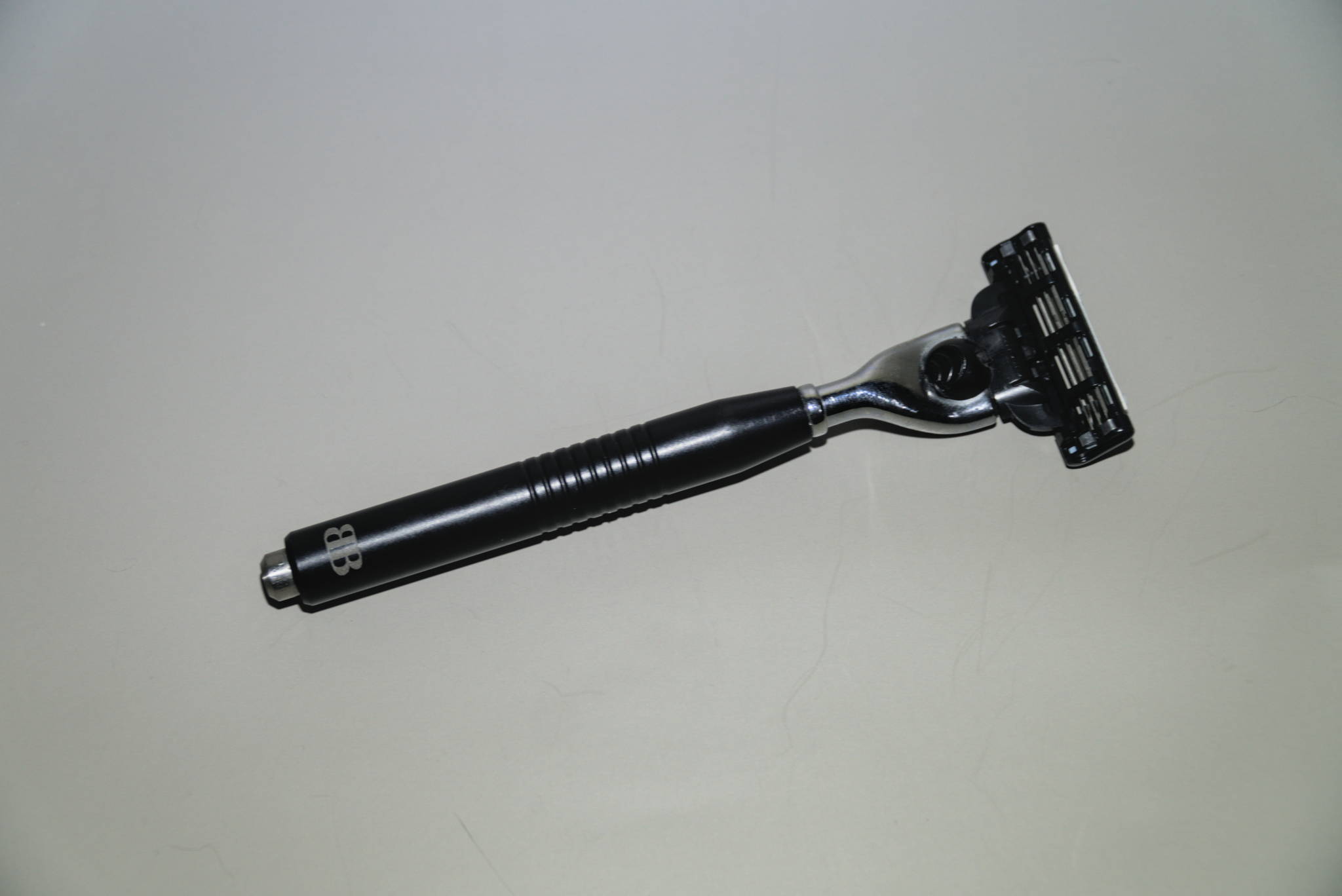
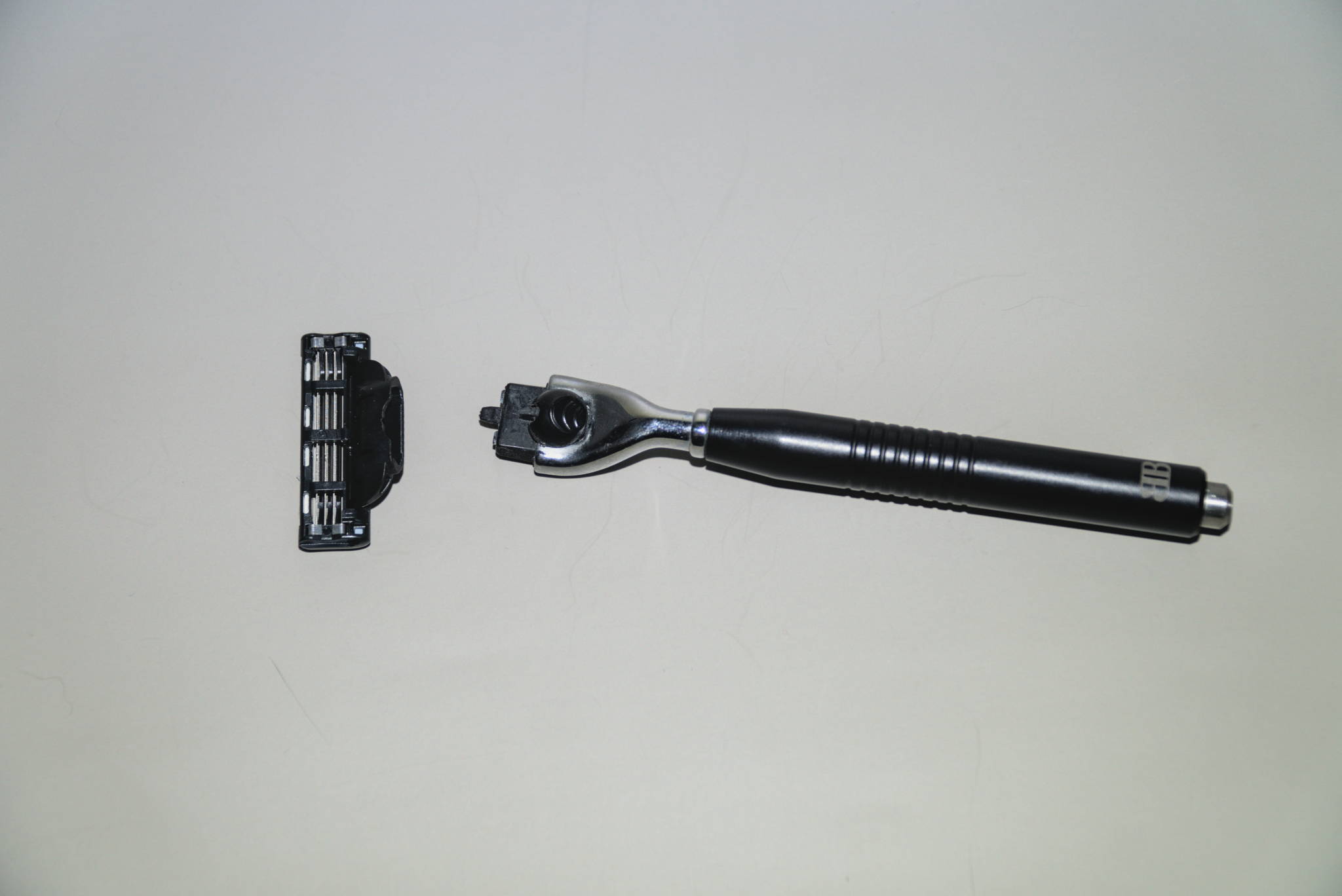
Modern safety razors are usually a handle that snaps into a blade cartridge. They tend to feature a lot of plastic and the blade cartridges are meant to be thrown away once they become dull. There are many styles, brands, etc. In this post I’ll be referring to the Gillette Mach 3 blade cartridges as they are common, are a reasonable blade and the ones I prefer if I’m forced to use a modern safety razor setup for some reason. These blades also have a very common Gillette connector so one can use other blades from Gillette if the Mach 3 blades are unavailable.
I should note modern safety razors bother the hell out of me and piss me off greatly. They are full of plastic, the cartridges are not small and are designed to be highly disposable. Additionally… I have a major problem with plastic waste when it’s not necessary and I get very grumpy when I do not having recycling options for a highly disposable design.
I’ll avoid a modern safety razors to an extreme level and I’ll only acquiesce if forced by circumstance due to these factors.
This post will call these razors ‘safety razors’ and I will be very explicit when talking about them. You can assume this post generally skips over anything related to this type of razor.
DE
DE razors are technically a safety razor, however I rarely see them talked about in such a fashion. In my experience you’ll see ‘safety’ and ‘DE’ as separate nouns. In this post I’ll maintain calling DE razors simply ‘DE’.
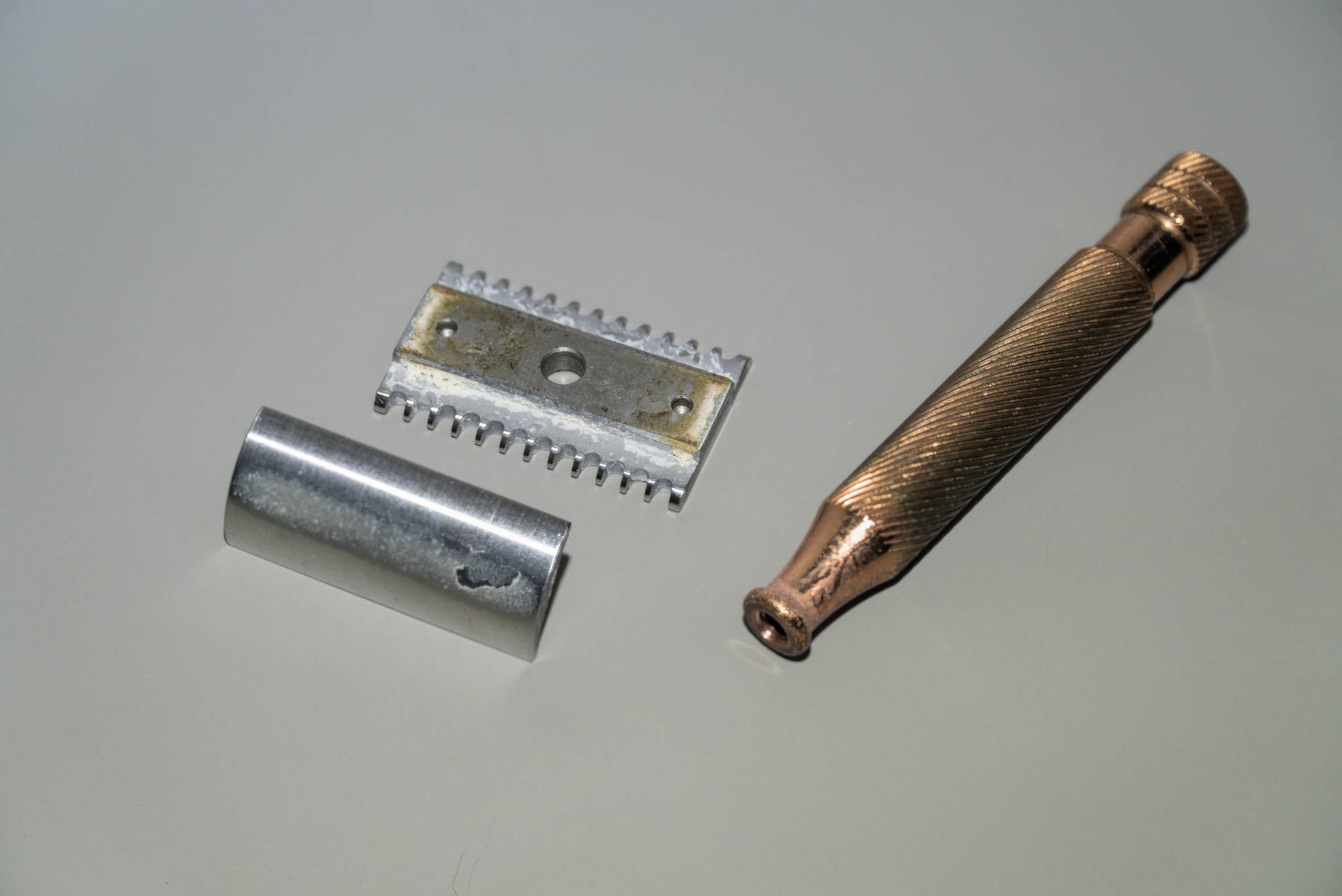
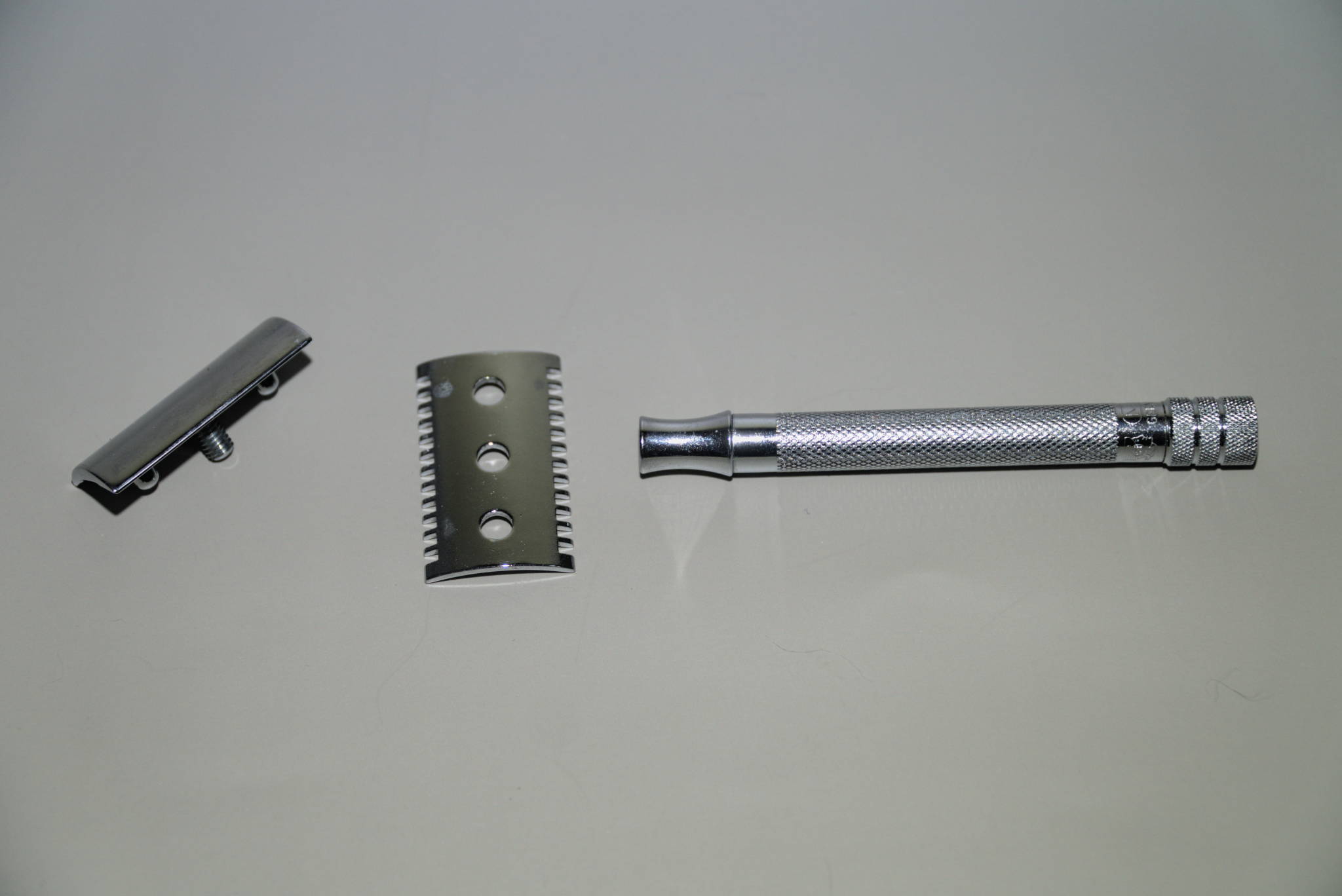
These razors are pretty straight forward and are generally only 3 pieces: a handle, plate and cap. The plate and cap hold a two edged razor blade and the handle screws onto the plate/cap assembly to hold the blade in place. It’s a simple yet highly effective design.
The blades typically wear out after only two or three shaves but are small, made of metal and inexpensive. They can be recycled but most facilities will tell you to put them in your usual trash. I’m not fond of being told to trash the blades but given the size… I can bite my tongue and focus my ire on bigger problems if I cannot find a facility willing to take used blades for recycling.
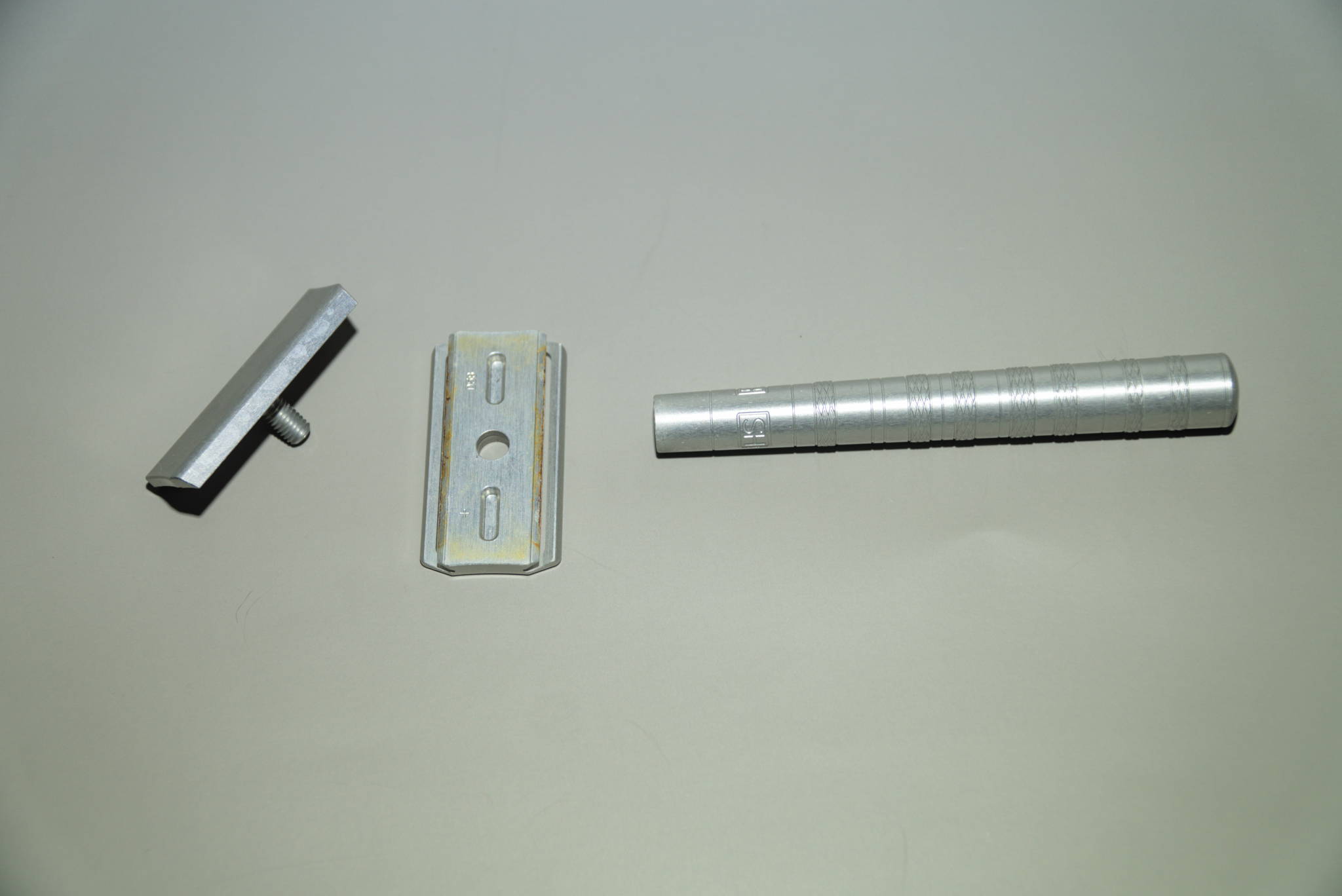
Henson DE Razor
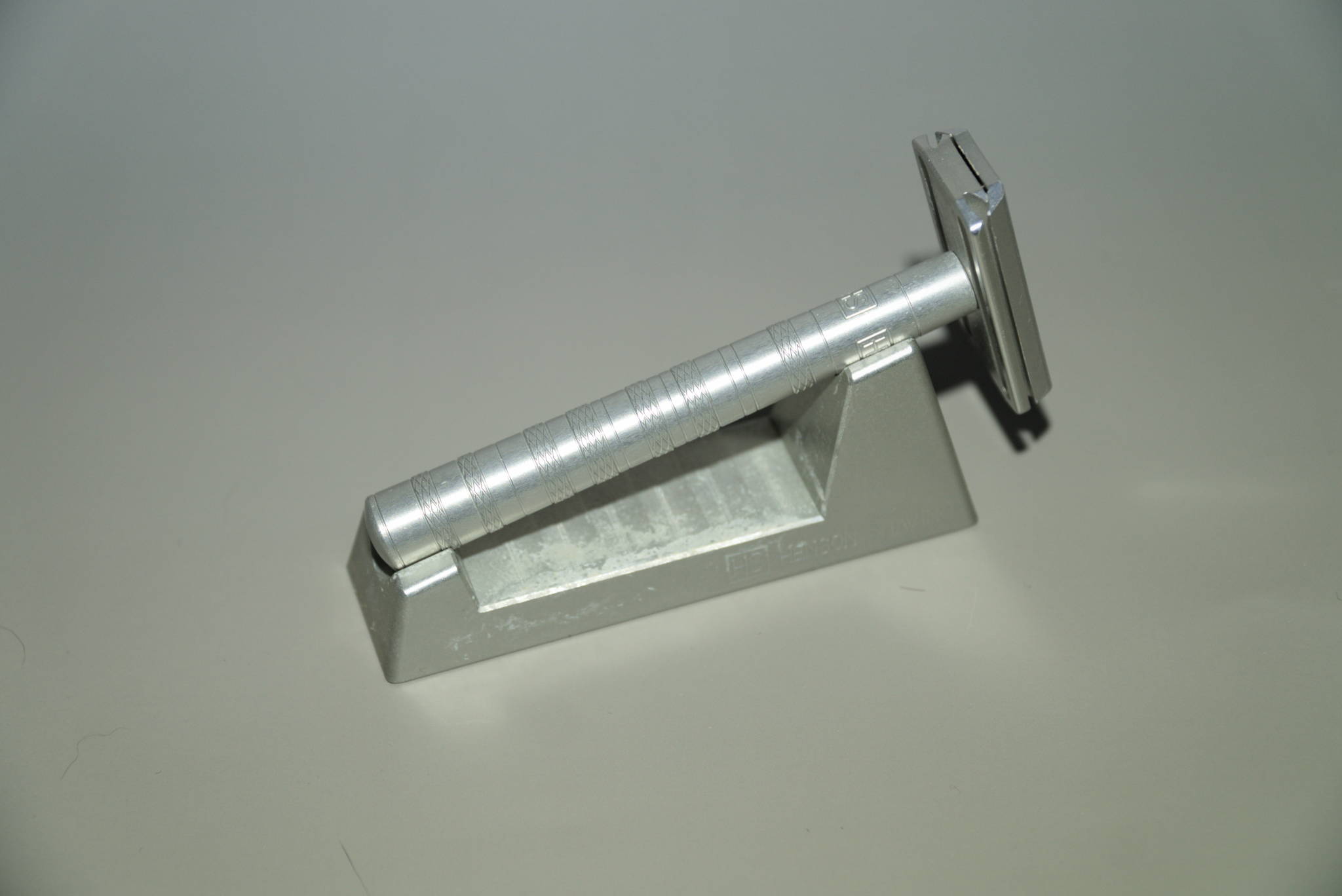
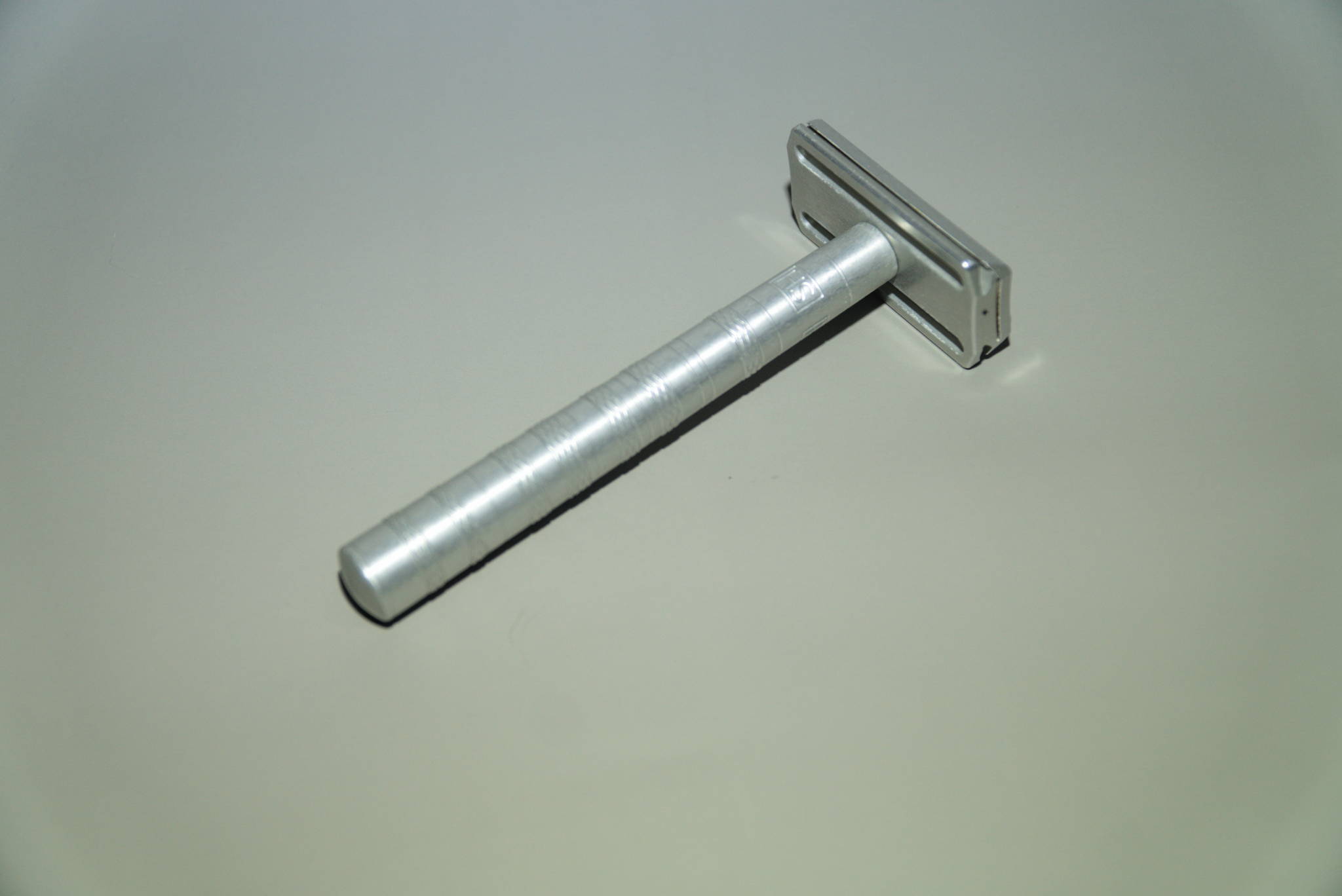
I did not plan to call out the Henson DE razor but I find it very special and unique. As much as I’d fight to keep some other grooming kit, I’d put up a bigger fight to keep my Henson. If I’d throw a punch or worse to keep a razor, it probably deserves special attention.
Why?
It’s incredibly forgiving and was created by engineering folk who did not fuck about.
The Henson is the only DE I’ve used that took actual effort to cause more injury than razor burn. It can cut you but it won’t unless you’re far from what I’d call ‘reasonable technique’. All others I’ve used have nicked and cut me, even with what is considered ‘proper technique’.
Beyond being incredibly forgiving, the Henson has a cutout in the plate. This cutout is lined up with the spot where hair / soap / etc will gather in the razor head when shaving. Due to the cut out, the Henson rarely clogs. Causing it to clog is do-able but I’ve found it only happens with hair lengths that are far longer than would be considered ‘reasonable’ for shaving outright (think well past ‘stubble’ length).
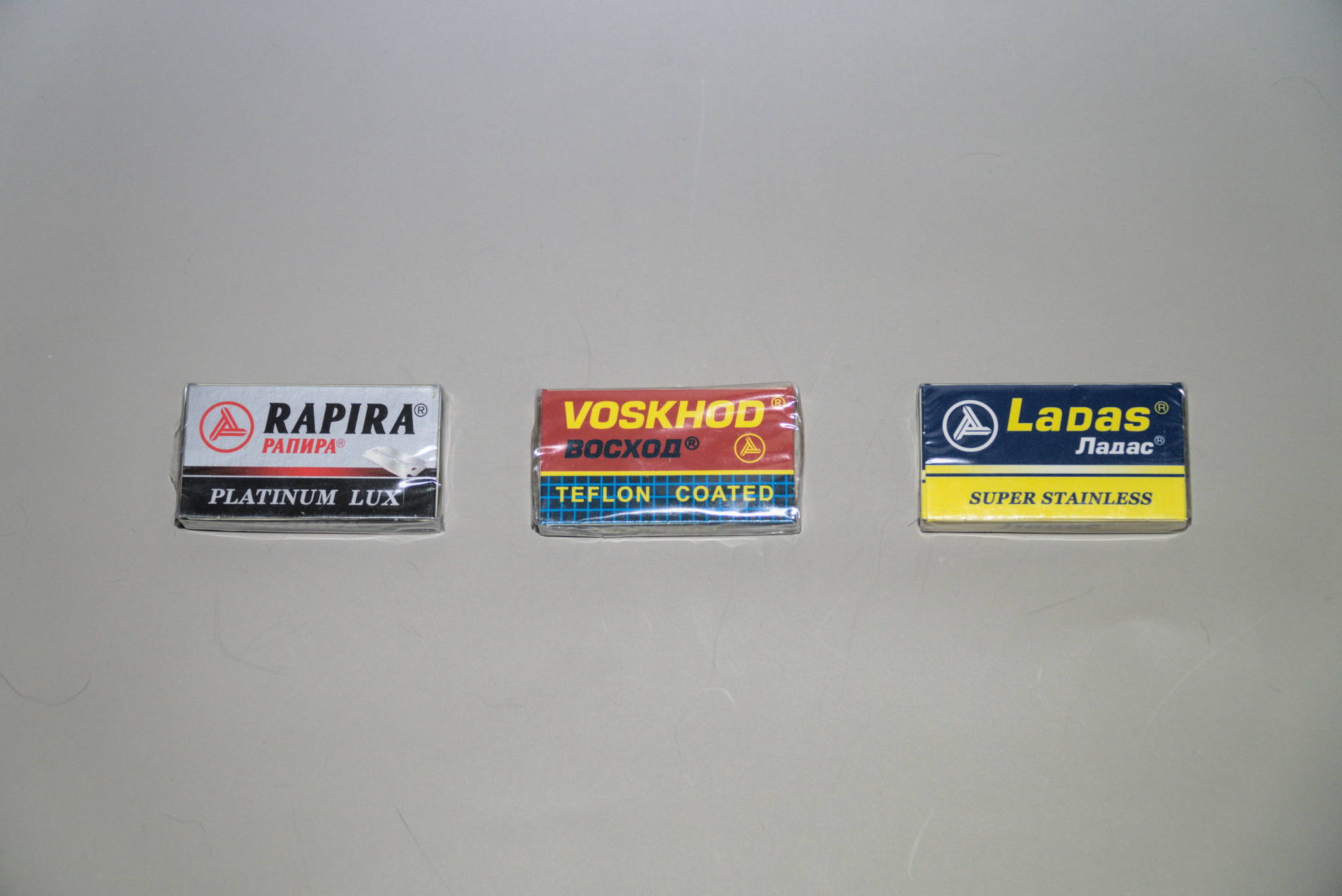
One thing to keep in mind is the Henson can easily be considered a non-aggressive shave. However, this can be adjusted quite a bit with blade selection. I find the razor has very different levels of aggression when using different blades such as the Rapira Platinum LUX, Voskhod and Ladas (all noted below in The List). In my experience these blades should cover most needs but if you have particularly thick hair, the Henson may not be the best option. It simply cannot be made as aggressive as some other plate designs.
A fun fact about the Henson is the creators are hardcore enough engineers to publish their research and technical data (see The List section for links). These are worth a read to further understand why I’m a strong proponent of the Henson razor.
This is one razor I’ll recommend without hesitation and I’ve yet to hear someone say they don’t like it. Some prefer other razors for daily use, sure, but none have said this is a ‘bad razor’ or to avoid it all together.
Rockwell Razors 6C & 6S
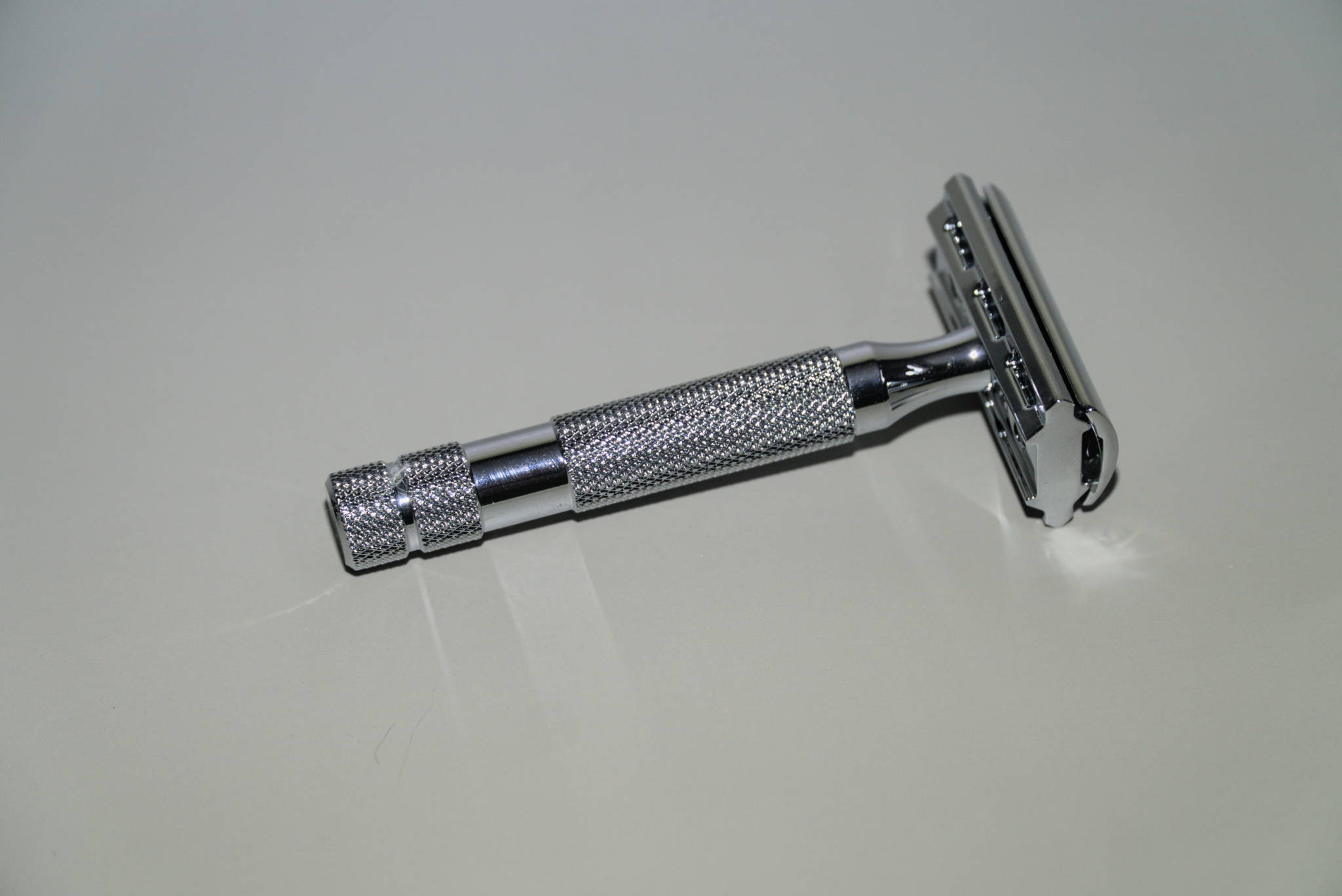
Rockwell Razors sells two razors that deserve special attention: the 6C and 6S. The only difference between the two is material: one is made of a chromed alloy and the other is main of stainless steel. I have the 6C on-hand and will be discussing this model specifically. However, the 6S is an identical razor and folk on the internet basically say the only practical difference is material, everything else is considered ’equal’.
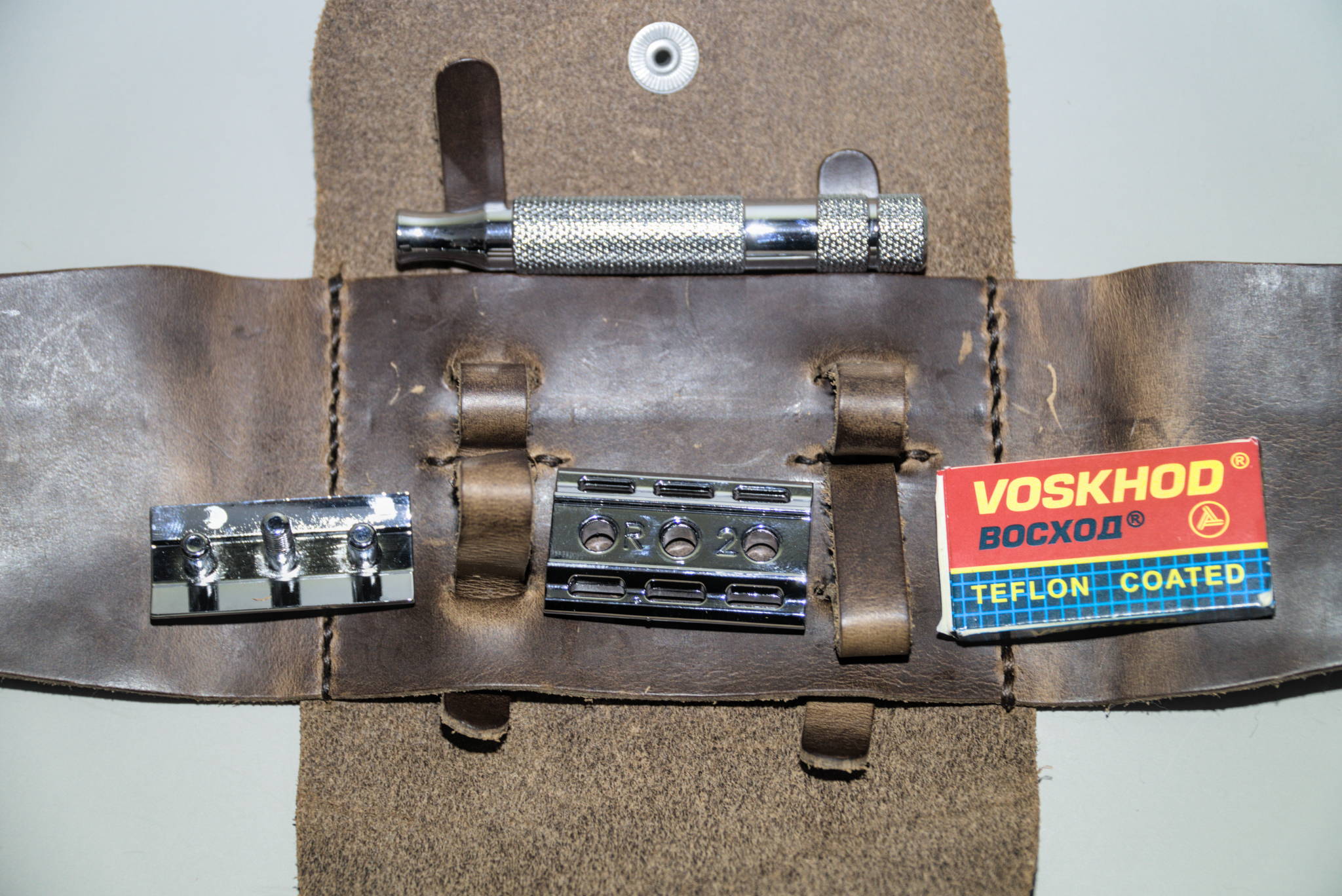
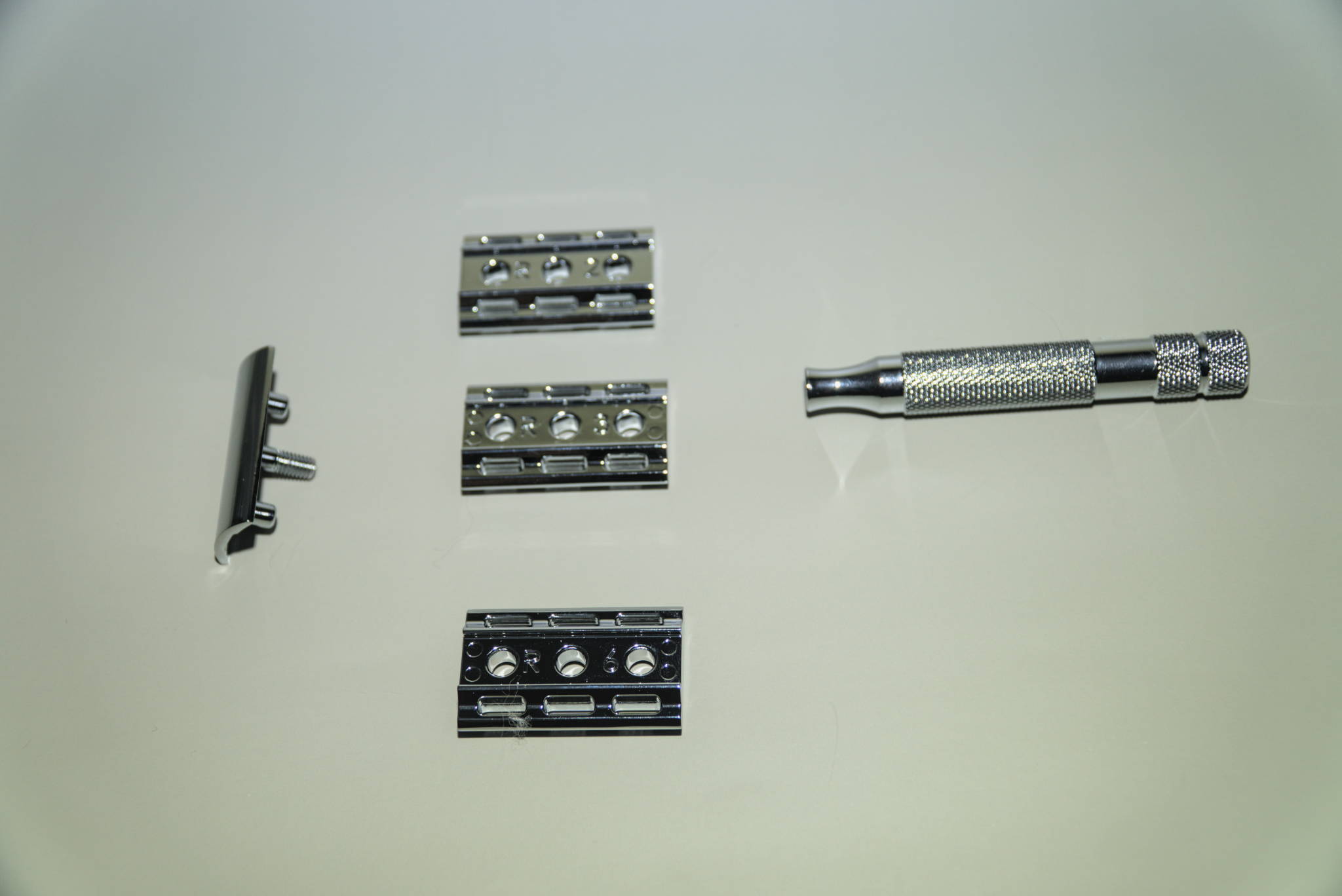
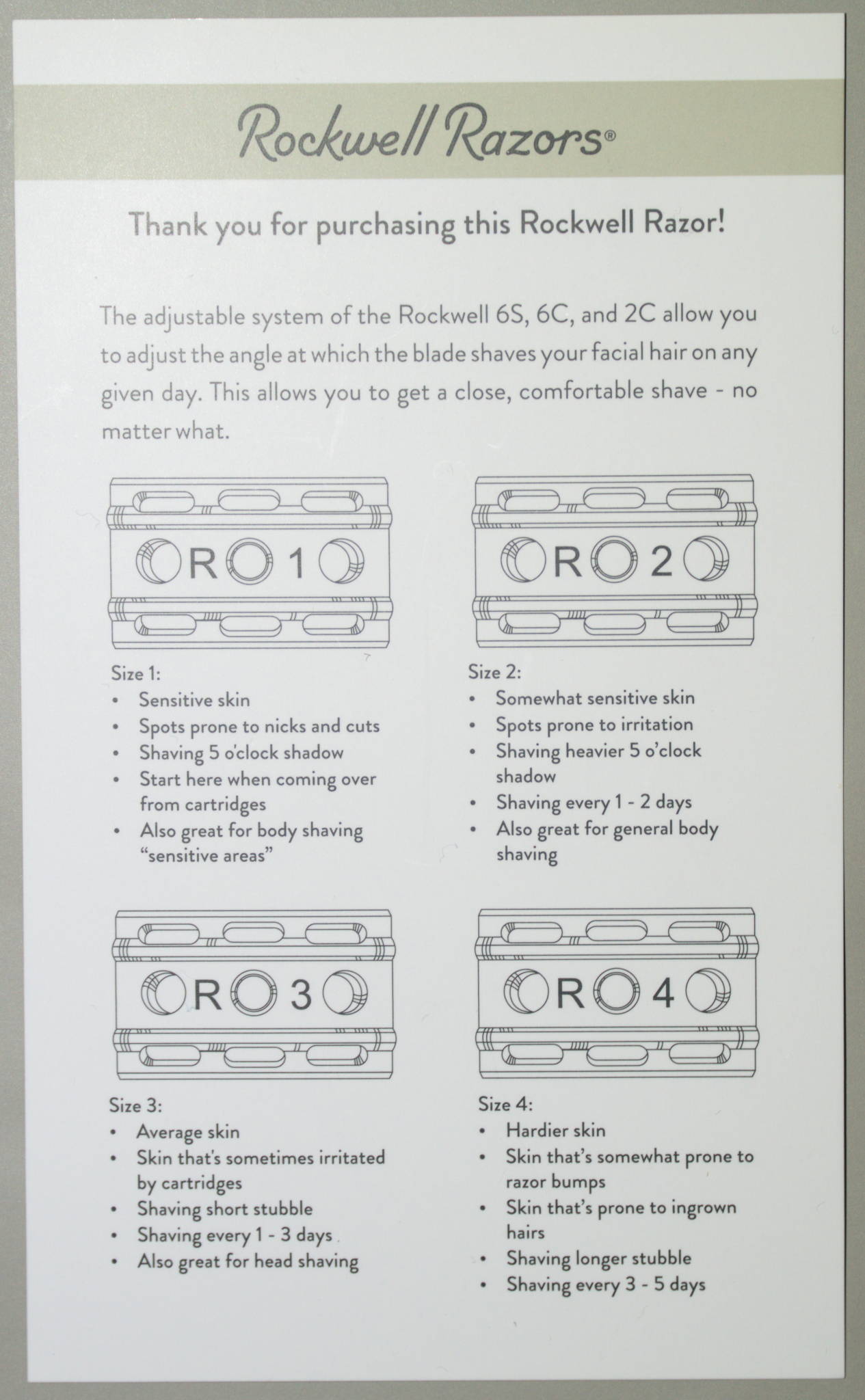
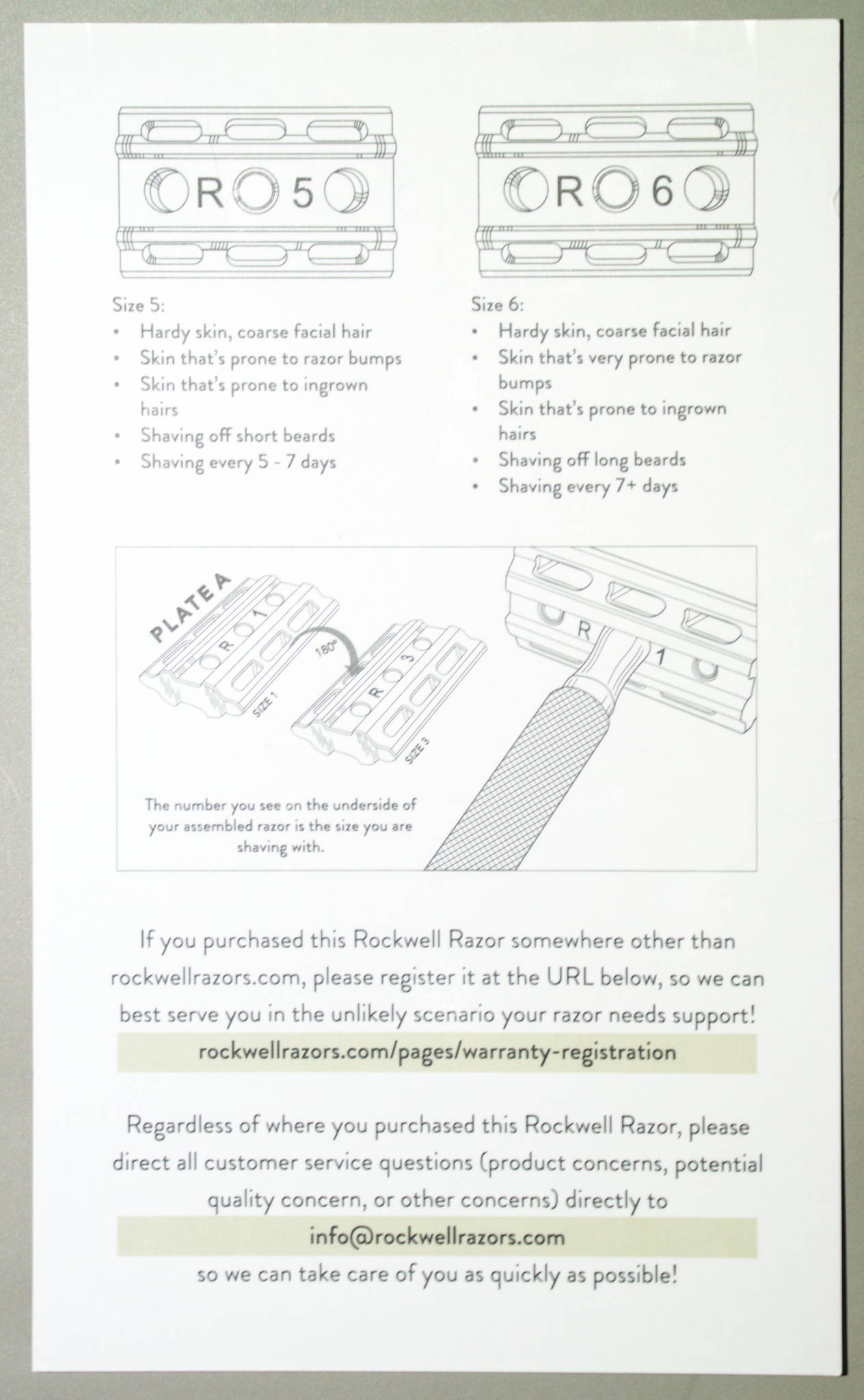
The 6C is a unique razor in that it’s adjustable via plate, not mechanism. They created a set of 3 plates with 6 different blade gaps. A typical DE adjustable will be some kind of mechanical setup, usually a screw mechanism, that a lot of folk don’t trust and/or have seen ‘go bad’ with heavy use. The 6C adjusting via plate selection avoids this mode of failure and is a more durable, longer-lasting form of adjustable DE razor.
The plates are very well designed when it comes to providing many options for how aggressive of a shave you want and they are great for helping find preferences. I tend to recommend this razor as a starting point. It’s affordable and lets you tinker with finding what works best. When combined with testing blades you’ll have a lot of options and will be able to dial in preferences very well.
Some folk dislike the fact you have to swap plates to adjust. This is valid and if I had to swap plates after every shave, I’d be annoyed and would likely just buy another razor to avoid that hassle. Much like I’d do if I had to swap blades more often than ‘wore out’.
That said: you can buy individual parts from Rockwell. If you have multiple plate preferences, buying parts to build specific setups so you don’t have to plate swap all the time is a reasonable choice. If I didn’t have a Henson setup for ‘general body work’, I’d have bought the parts for an additional Rockwell setup so I can keep ‘face’ and ‘body’ razors at the sink and in the shower instead of having to move a single razor around almost daily.
Another perk to the 6C is that I can travel more easily. I find I gravitate to the R2 and R4 blade gaps (they are 2 sides of the same plate so I only have to travel with one plate) depending on where I’m shaving. I also tend to use Voskhod blades with the 6C as they are a good blade (for me) that can be used reasonably well anywhere on my body so long as I pick the right plate to use. Due to this I can take a single razor with me when traveling and flip/flop between face shaves and body shaves freely. This has been quite nice for me and allowed me to continue to use a small dopp kit for travel.
I may not throw a punch to keep this razor but I’d definitely fight to keep it above any others aside from the Henson.
This razor is 100% worth a look for those starting out with DE razors and I strongly recommend it as the first DE razor you buy. It’ll give you a lot of flexibility, options and help you find what works best for your body.
Blades
Razor blades are very much A Thing in the world of DE razors.
When it comes to blades I normally tell folk to go to a place like West Coast Shaving, buy a sample pack and start trying blades. The sample packs will tell you if you prefer mild, mid or aggressive blades and will help guide you to a blade you generally prefer.
Buying a sample pack of blades is how I discovered I prefer Russian blades and Rapira brand blades (Platinum LUX, Voskhod, Ladas) in particular. These blades have treated me well and work in a variety of scenarios. I usually recommend Rapira blades if folk feel the sample packs are ’too overwhelming’ or ’too much choice’.
I will note it can take a bit of time, testing and tinkering to find a preferred blade but it is worth it long-term. I don’t regret investing time into blade selection or any other time I spent in this world. I shave daily which means I’ll spend a lot of time shaving over the course of my life. I figure I should make that time non-problematic and as boring and uneventful as possible. Even if it means some up-front time investment.
I’d also like to point out this is an incredibly personal choice. Online reviews can give some fundamental info like how aggressive a blade is but beyond that, take everything with a pile of salt. Not a grain of salt: a pile of grains. Everyone’s biology is different and what works for one human may not work for another. As long as you like your choice and it works well for you, it’s valid.
Brushes
This is another one of those worlds where options abound. Thankfully brushes tend to only be made with one of four kinds of bristle: silver tip badger hair, badger hair, boar hair or synthetic. The other considerations are knot size and handle.
The type of hair/bristle you select will determine how ‘wet’ of a shave you get. Silver tip badger hair holds a lot of water, badger hair holds a good amount of water and boar hair is considered ‘dry’. I’m not sure on synthetics as I tend to avoid synthetic materials, you’ll need to do digging if you want synthetic bristles (this is a good starting point for vegans).
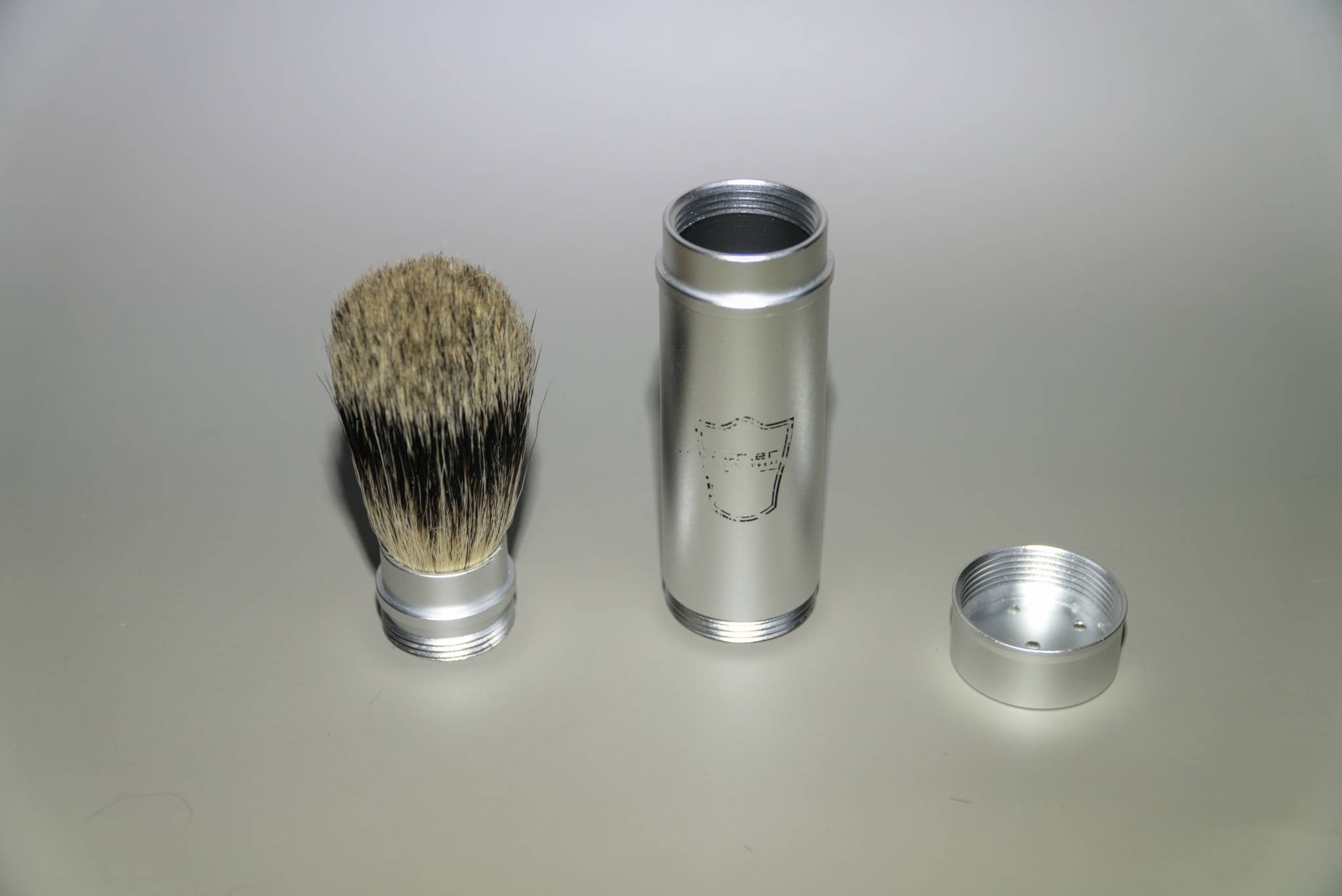
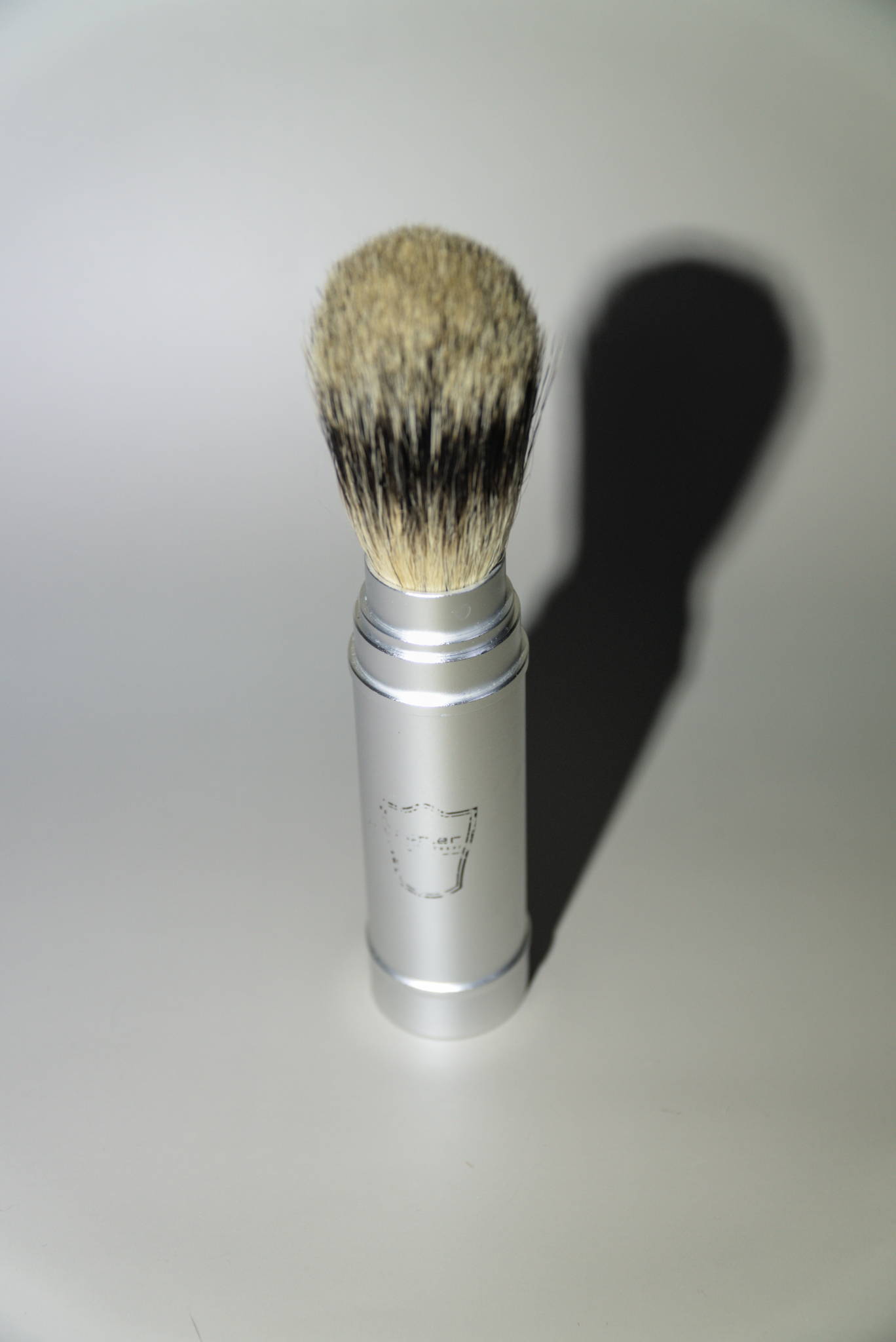
I, personally, prefer a drier shave and use boar hair primarily. I do have a travel brush from Parker that’s badger hair and it works fine but it’s wetter than I’d prefer as a primary use brush. Everyone has different preferences and I usually suggest normal badger hair (or synthetic for vegans) to start and then move to silver tip badger hair or boar hair if you want to tune how wet your shave is. Most folk will probably be fine with just badger hair or synthetic bristles and not bothering with other materials.
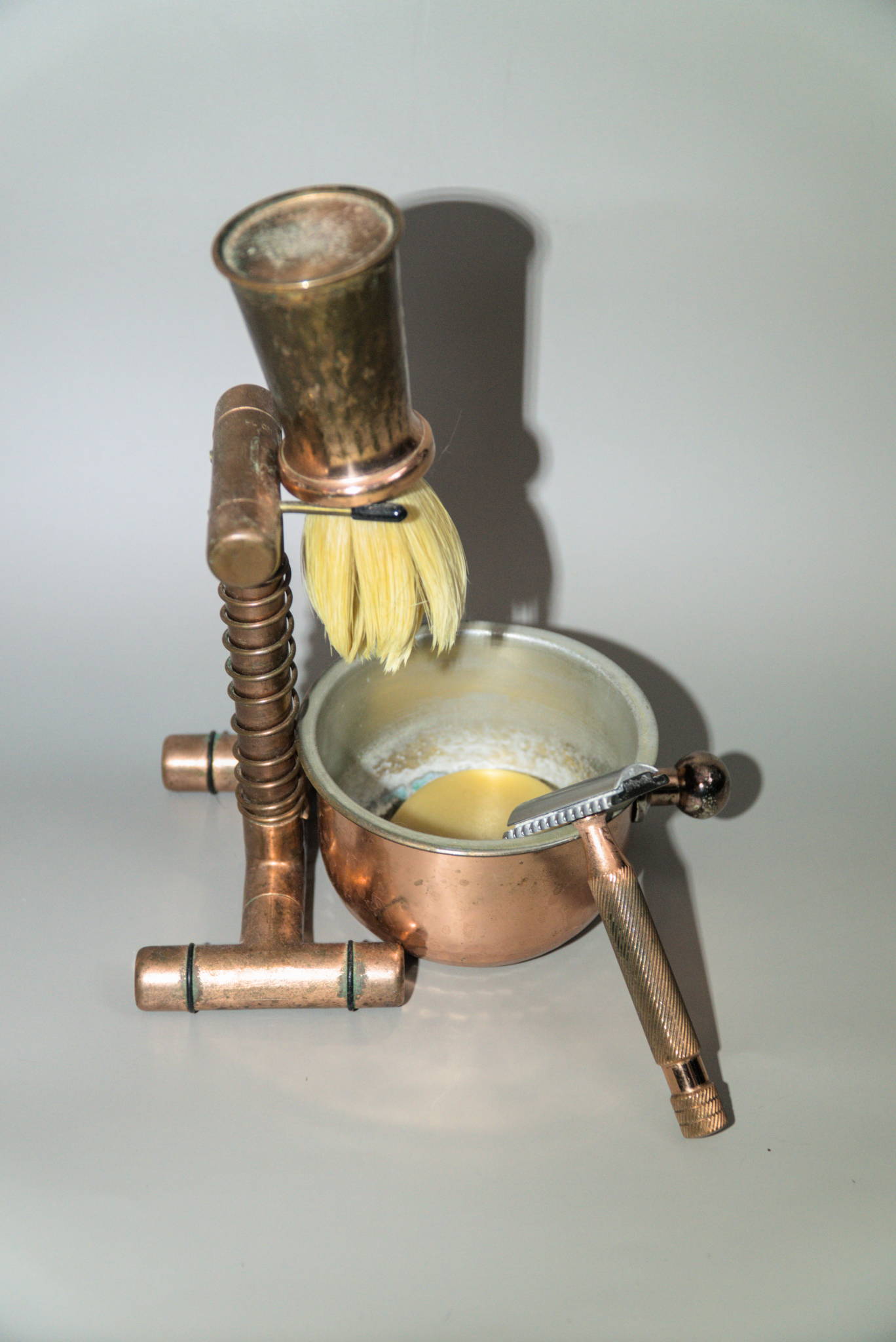
It should be noted: you can buy knots independent of handles. This can be helpful if your knot goes bad for some reason (it shouldn’t but you never know) or you find a handle you love but don’t like the knot it came with. When I was putting together my main face shaving setup, I bought a handle and knot independently to get what I wanted.
Knot size is a factor for brushes but I’ve found it only dictates the overall size of the brush. I generally prefer a smaller knot but that’s only because I tried all kinds of brushes ‘for science’ over the years. If I hadn’t spent time with different knot sizes I’d have just ignored this decision point all together. In my opinion, most folk can ignore this factor and go with ‘whatever’. If you’re like me and a bit of a nerd that likes to tinker, it may make sense to try a few knot sizes to dial in your preferences across all factors.
For handle: this is incredibly personal. It really comes down to your individual preferences in style, material, etc. I’d recommend poking around and getting a brush with a handle style / material you like and move on. This is what I did: I found a material / style that looked compelling, bought a handle, stuck a boar hair knot in it and moved on.
Body
Facial Shaves
This section focuses on thick hair. The kit here can be tuned and/or adjusted to work with thinner hair but there are better options available for thin hair.
Moustache
Before getting specific it should be noted that I hate having a moustache. Hate might even be a ’nice’ way of stating how I feel about a moustache on my upper lip. I have no problem if others have one, you do you. However, one of my own? Yeah, no. Fuuuuuck. That.
With that out of the way…
Historically I’ve used a Braun Series 5 (straight cutter style, bought no later than 2009) to nuke my moustache every morning just before I brush my teeth. I’ll even run it over my lip before going out for a long night to remove the 5 o’clock shadow that it accumulates over 8 - 12 hours.
Sadly the Braun clearly needs a new battery and has for 5+ years. I did get 15+ years out of the device and as much as I’d prefer replace the battery and move on with a technique that Just Works, it’s time to move to a non-electric (see the Electrics section for why).
Fortunately for me, I started work on this blog post shortly after I made up my mind to move to a non-electric razor for moustache work and had an excuse to lean into the change. Unfortunately for me, I had to re-learn my technique and think back to age 12 when I first started shaving my moustache (yep! I’ve never liked having a moustache).
After much razor burn, blood letting and faffing about, I found a technique that works well for thick hair that is dense and grows fast.
I use a Rockwell Razors R2 plate with Voskhod blades and Chagrin Valley Soap Dead Sea Clay bar soap. Basically the kit (sans brush) that I use when traveling.
If I shave with the grain then sideways across the grain while applying lather (by hand, no brush) between passes, I get a good shave that’s close and avoids burn / nics / cuts that are all too common when shaving against the grain in this zone (for me at least). Against the grain is a far closer shave but this is the only area of my body where I cannot shave against the grain.
I also shave this area at least once per day so I can get away with a less aggressive Rockwell plate. If I were a bit more lazy, I’d be using the R4 plate as I know that works very well for this kind of scenario (see the Beard section for specifics).
It’s a straight forward setup and I’d recommend this approach if you have thick, dense hairs you shave very frequently. It really is a simple approach and not nuanced.
Beard
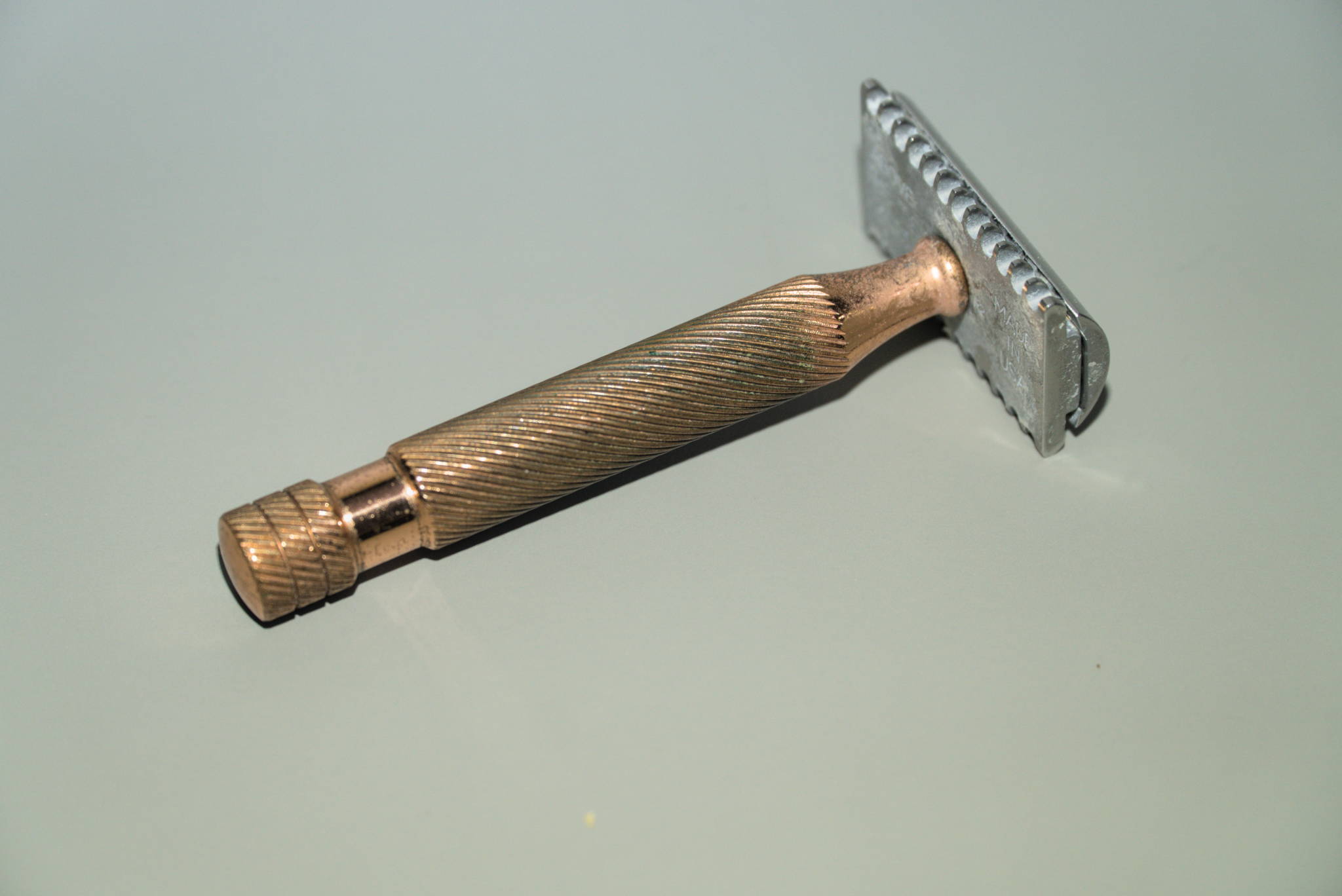
My beard zone is well known for having thick, coarse, dense hairs. It’s one of the only parts of my body with such hairs and they require an aggressive shave setup. For this purpose I use a razor from Above the Tie (prior to their shutdown / buyout) with an open comb and Rapira Platinum Lux blades. I also use a bar shave soap with boar hair brush as I prefer simple soaps and less dry brushes for this area of my body. These, when combined, are an aggressive shave that will chop through my forest of hairs easily. I’ve also had success with the Rockwell R4 plate but I prefer the Above the Tie setup for ‘at home’ use.
This is a pretty standard setup for folk with thick / coarse / dense hair as open comb’s tend to be aggressive in nature. Yes, this section really is simple and not nuanced.
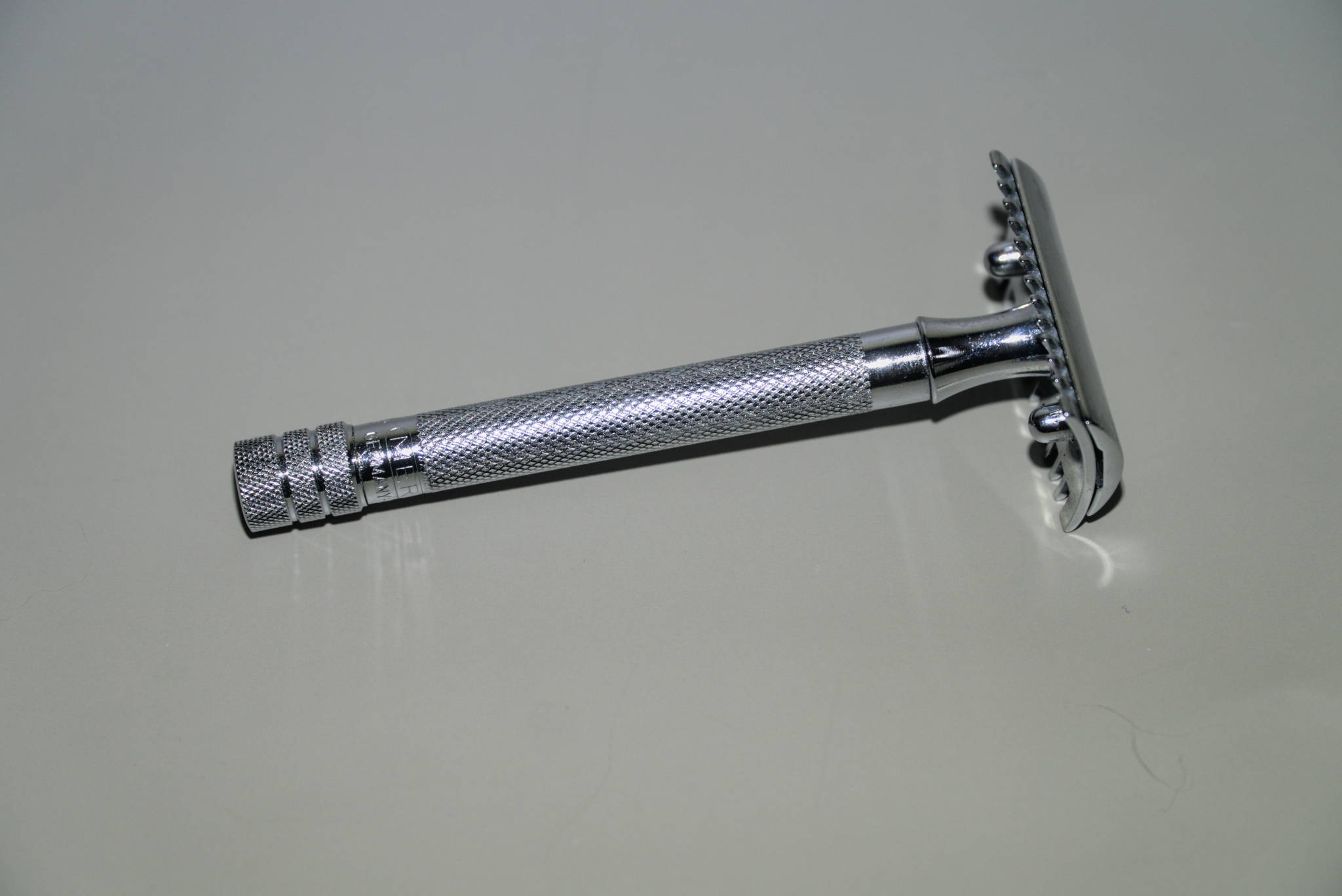
Note: the Merkur #25C is a good, aggressive razor option that won’t set fire to your wallet or bank account. I used it as my initial DE razor before moving into less ‘commercial’ offerings. I’ve also included other, aggressive, options in The List section for those who may prefer a design that’s similar to the Above the Tie design I use.
Skull
This section focuses on thin hair. The kit here can be tuned and/or adjusted to work with thicker hair but there are better options available for thick hair.
I shave my skull with a Henson DE and Voskhod blades. I do so in the shower as my first task and it usually goes pretty quick. I don’t use soap / lather / etc and just shove my head under the shower and get to shaving. I shave against the grain and sideways across the grain to get a close shave with minimal razor burn. I also use my ‘off hand’ to help pull skin taught and feel for any spots I may have missed as I’m shaving by touch alone.
It took me a little bit to properly develop this technique but it works well and I find it to be efficient and non-problematic.
There is one thing to keep in mind: this only works if the hair on my head is ‘stubble ish length’. By that I mean it can be just getting soft (unlike stubble) but any more length and shaving will be A Problem. It can be done with longer lengths, to a point, but it quickly becomes difficult.
To address any length issues, I trim down the hair on my head using a beard trimmer prior to shaving my head. Usually before I get my head wet to ensure the trimmer can take my hair down to a ‘stubble’ length properly. I use a beard trimmer for this task because they tend to be lighter, easier to control and more adaptable to other areas of the body.
Note: the Rockwell Razors R2 and R4 plates work well for this task too.
Body Sculpting
This section has good options for both thick and thin hair.
Despite saying the only thick hair on my body is my beard, I do have some reasonably thick hair on my body in the usual spots like arm pits. It’s not as thick as my beard but it is thick enough to fall outside the definition of ’thin’. Due to this, the info in this section can be adapted to thicker hair, to a point. However, there is a knee in the curve that’ll push some towards more aggressive setups. If you have very thick body hair, I’d recommend reading the Facial Shaves section instead. You can shave a body fully with a very aggressive setup but it requires a bit more patience and technique than using what I put forth in this section.
Before getting into razor and blade selection, I should note that I do not use soap for body work. This is due to the fact I shave all but my face in the shower or bath where water is on my skin non-stop. I find this sufficient for shaving needs. However, I do know others who use shave soap / cream / gel for body work which is perfectly valid. I recommend folk try without soap / cream / gel and, if they run into problems, only then look towards soap / cream / gel options.
Shaving your body can be easy or hard depending on where you’re working. For example: legs are easier to shave than armpits. You may also have thin hair on your legs and thicker, non-thin hair in your armpits too which complicates the situation.
Due to this I strongly recommend the Henson DE razor for general body work. See the dedicated section about the Henson for full details on why.
Blade selection will be a major factor to consider. I’ve used both Voskhod and Ladas blades over the years with a slight preference for the Voskhod as it is just a bit better with thicker hair than the Ladas. Given I tend to shave spots like my armpits (not thin, not thick hair) more frequently than spots like my legs (thin hair), I tend to default to Voskhod blades. In general, I recommend…
- The Henson DE razor or Rockwell Razors 6C R4 plate
- Ladas blades for folk shaving thin hair most often. These will work for non-thin, non-thick hair reasonably well.
- Voskhod blades for folk (like me) shaving non-thin, non-thick hair most often. These will work reasonably well for thin hair.
- Rapira Platinum LUX for folk shaving thick hair. Please note: the Henson with these blades may not work well for extremely thick hair.
Travel
This section has good options for both thick and thin hair.
Commercial
For travel, DE safety razor folk are presented with a bit of a problem: blades. A lot of modes of travel, particularly air, won’t let you have DE razor blades in the cabin with humans. Anyone who travels with only carry-on luggage suddenly cannot bring their DE blades with them. They either have to check a bag or travel without blades.
This can be something of a major hassle and can cost money (checking a bag) or requires you to hope and pray you can stop at a pharmacy or other store to obtain DE blades. In the latter case you also have to compromise on what blades you use while traveling. This can be a huge hassle and/or wholly untenable.
My solution to this problem is to use Gillette Mach 3 blades and compatible handle when traveling. They work ‘well enough’ and are the cheapest disposable razor blades that I can get along with. I loathe this fact as I don’t want to contribute to the disposable nature of the culture here, I don’t want to increase my plastic waste foot print and I don’t want to spend nosebleed amounts of money on blades.
That said: this helps me avoid a lot of hassles while travelling. I can keep them in my carry on luggage. If they do get confiscated or I run out, the blades are almost universally available for purchase. The blades also use a clip design that’s shared with other blade models so you have a bit more flexibility if stuck buying blades when not at home.
I did get semi-fancy and bought a metal handle for the Mach 3 blades on Etsy years ago after my original handle broke (I discovered DE razors later in life than I’d prefer). I was able to solve my problems with the handle at least.
I should also note I’ve been harassed badly by various departments / agencies / etc during my travels and try to avoid giving those jackasses an excuse to hassle me. This is one of my primary factors, if not the primary factor, pushing me towards commercial razor blade use when travelling: the jackasses need to find a ‘reason’ for hassling me unrelated to my shave kit.
DE
For situations where I can travel with DE safety blades…
If you read the rest of this post already, you likely know what I’m about to say.
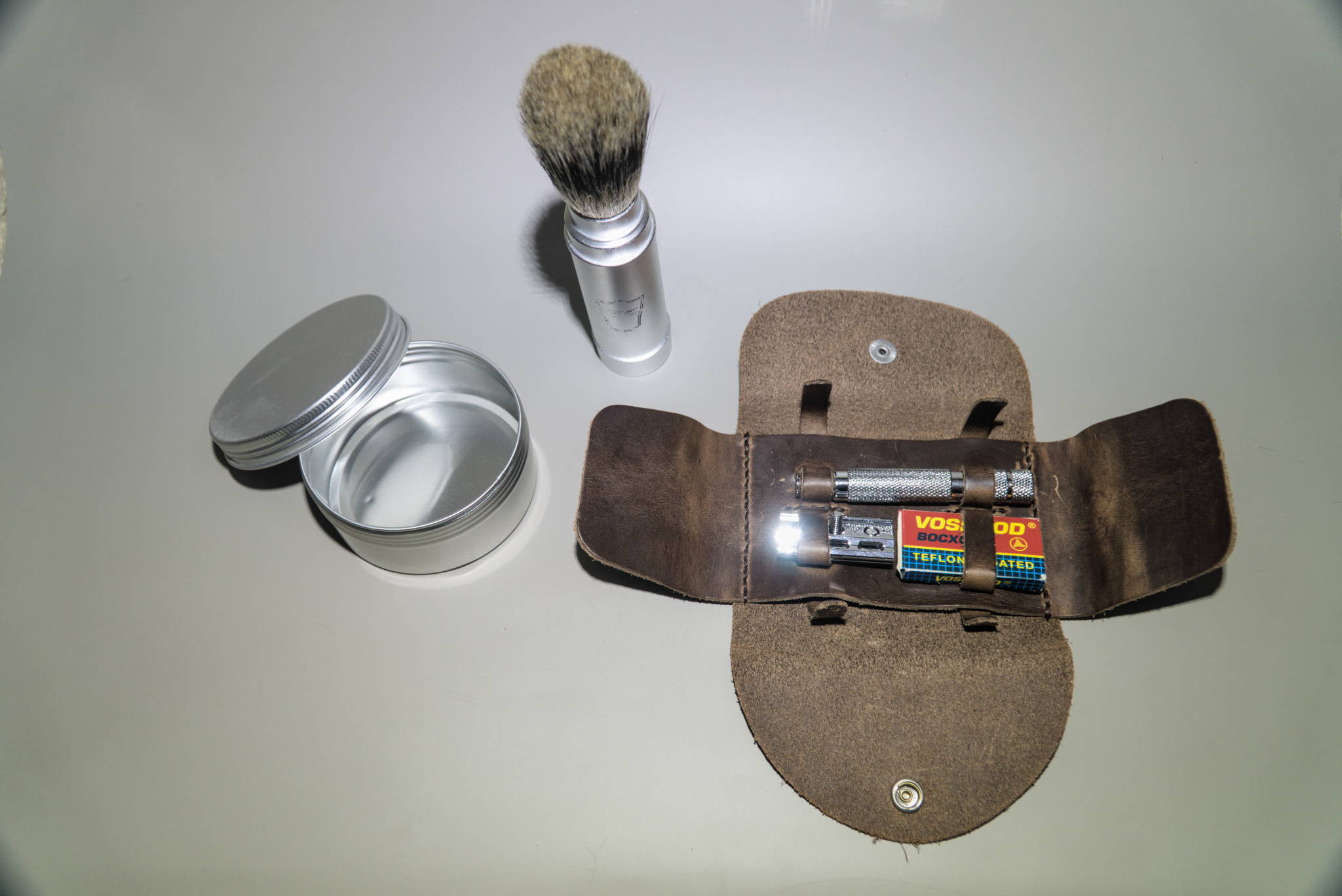
Whenever possible, for travel I use the Rockwell Razors 6C with R2 (thin hair) / R4 (thick hair) blade gaps. This allows me to adjust how aggressive my shave is depending on where I’m shaving by simply flipping over a plate. As much as I adore my Henson, I’m far more willing to lose my Rockwell Razors 6C. I’ve also used the razor extensively and daily so my muscle memory is well tuned to shave anywhere on my person with the Rockwell.
In addition to the Rockwell, I take…
- Voskhod blades
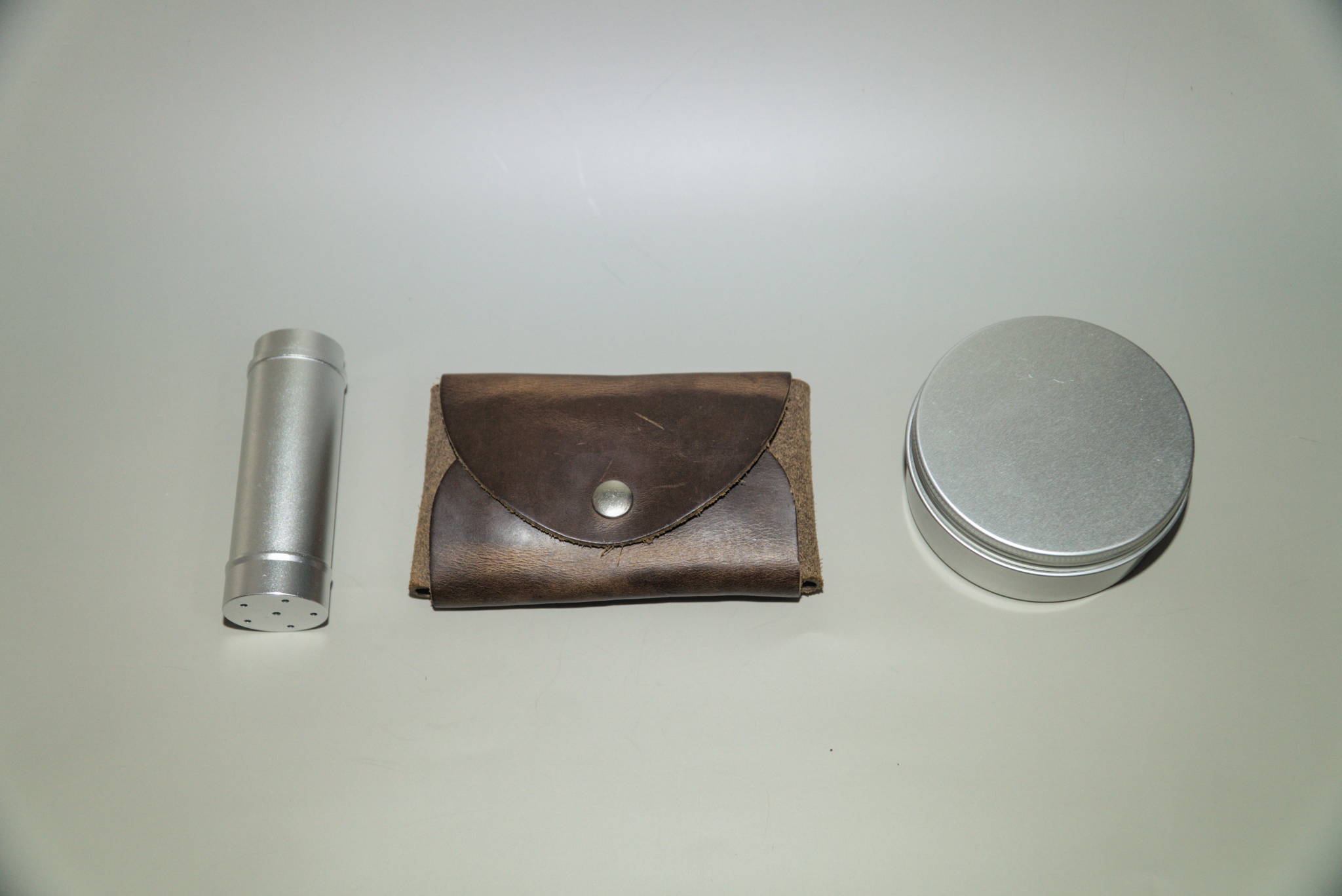
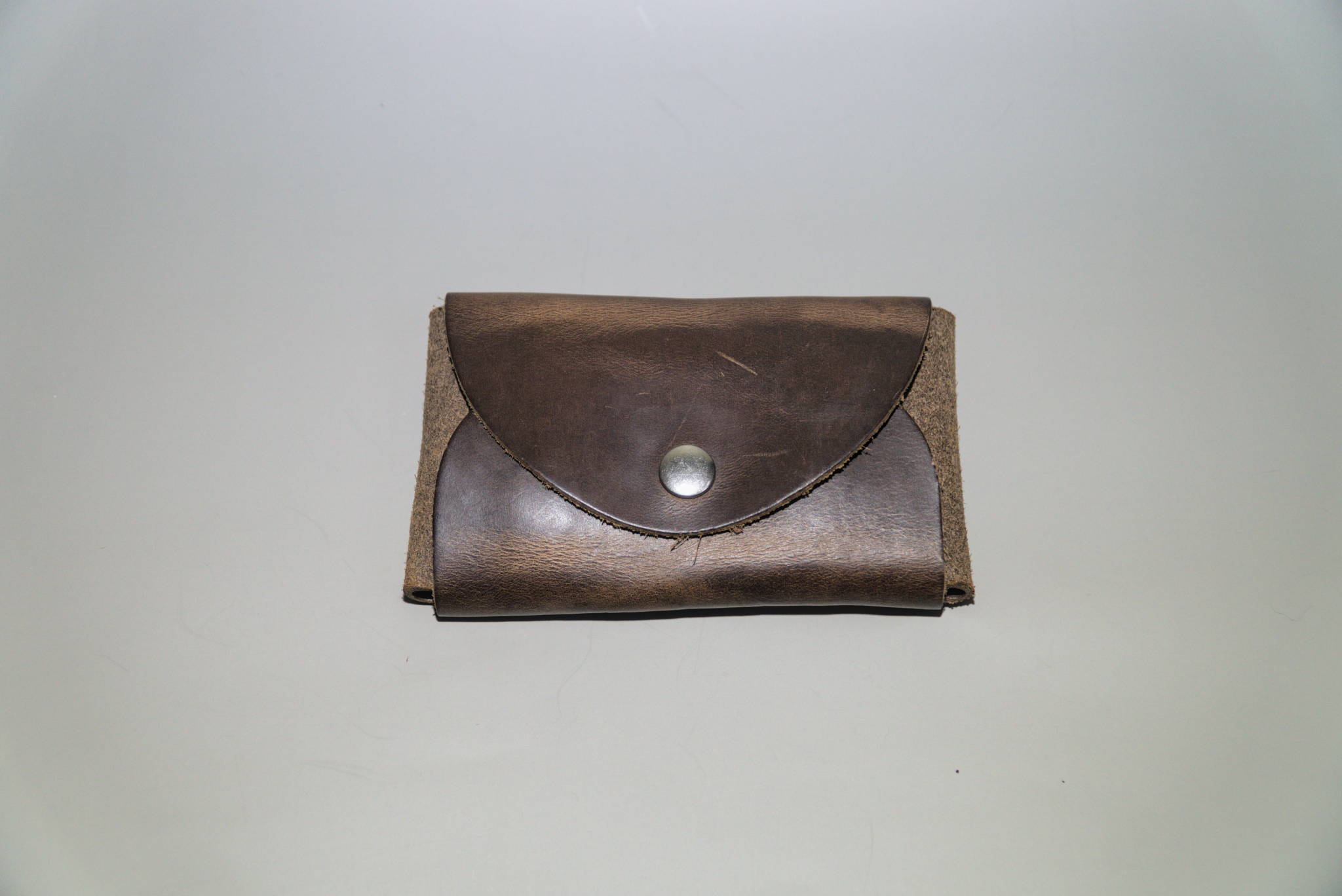
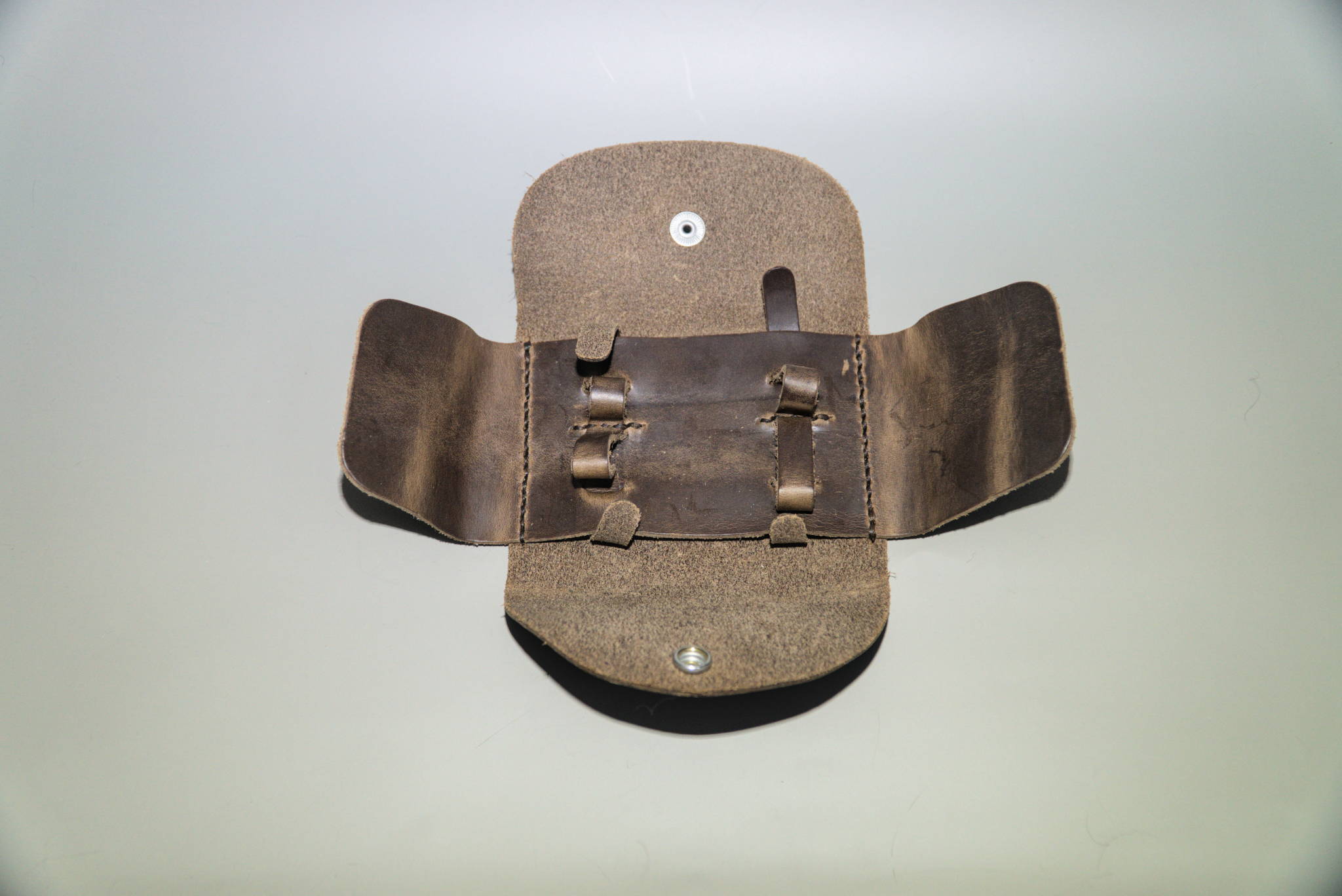
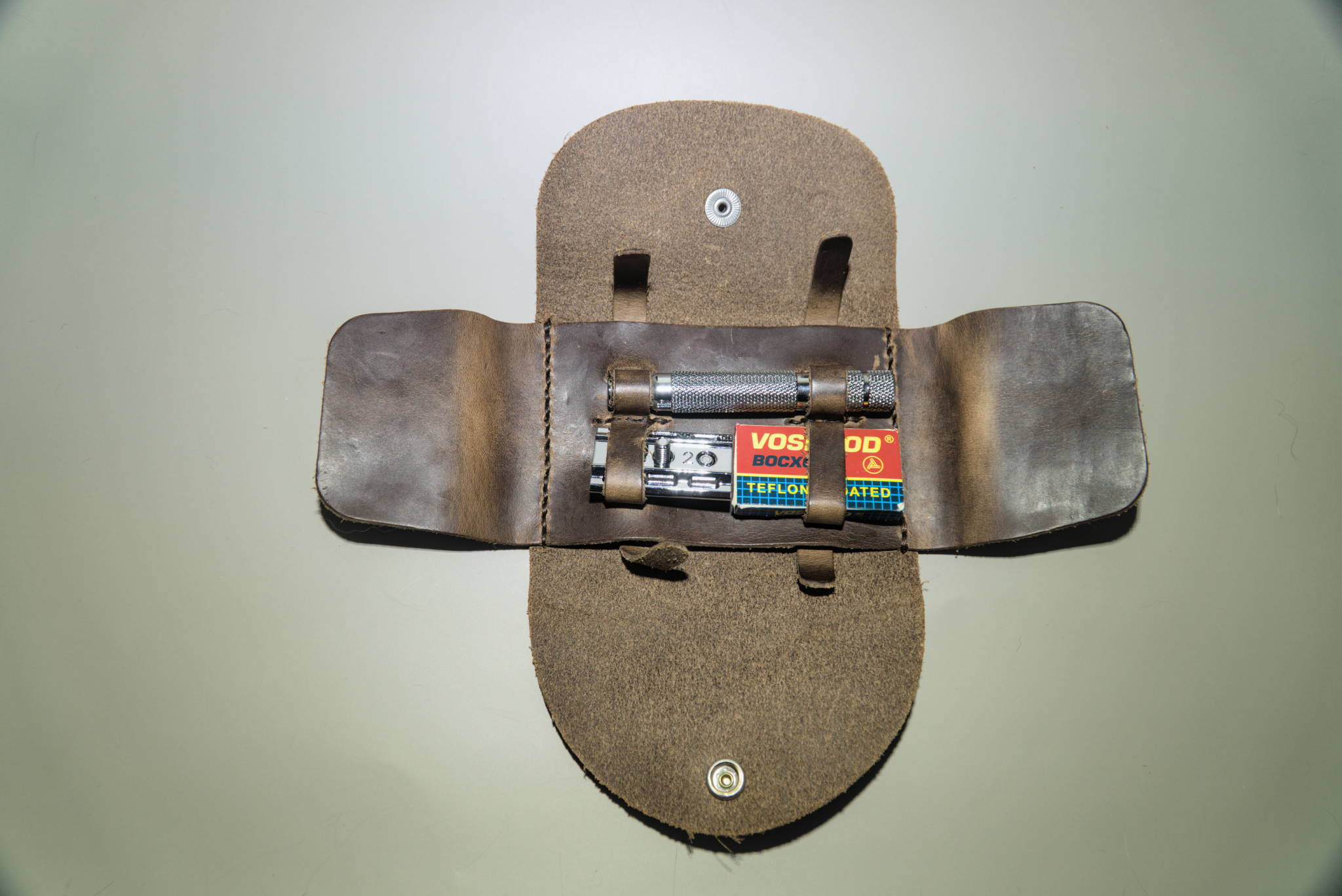
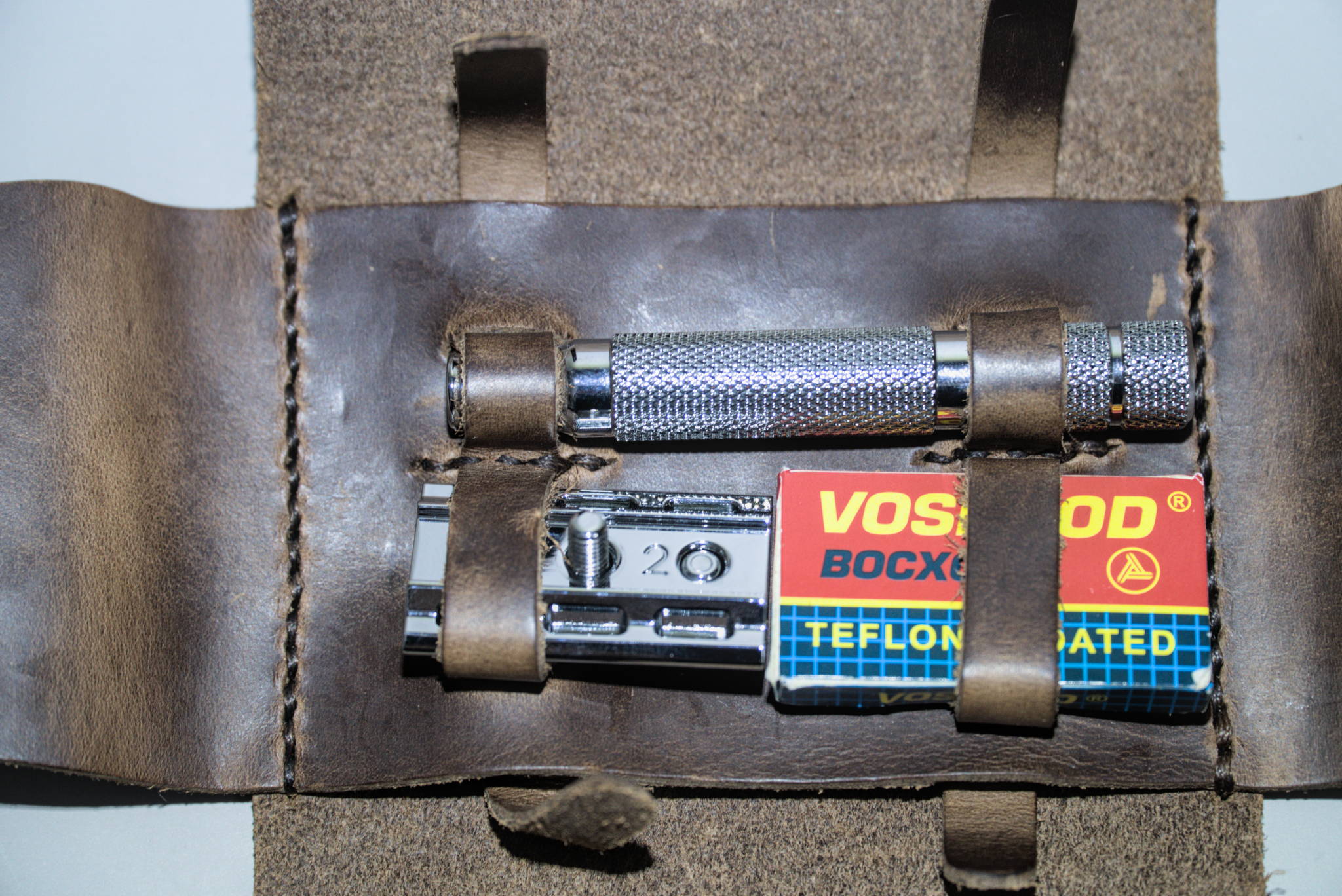
- A leather case that holds the razor and blades
- A Parker travel brush that collapses on itself
- Chagrin Valley Dead Sea Clay bar soap
I use the noted soap because I can also use it as a ‘whole body’ soap (yes, including my head with or without hair) and it leans into my desire to ’travel light’.
I toss all this into a very small dopp kit with a toothbrush, some dental supplies (dental specifics are a story for another day / post) and a micro fiber cloth for my glasses. It’s simple, effective and essentially the barest of minimums I can get away with for sundries when traveling.
The only real nuance here is that I will flip the Rockwell plate to tune my shaves as I don’t shave all the things every day so I do need the ability to tune my razor setup lightly. The Rockwell makes this a trivial task.
The List
- The Royal Hair Trimmer
- Manmower
- Good for maintaining stubble length hair
- Designed for beard use
- Works on other areas of the body
- I’m using the ‘Metal Mini’ model
- Razors
- Above the Tie DE
- Good for aggressive shaves
- 304 stainless cap
- 304 stainless plate, open comb
- Knurled copper handle, long
- No longer sold
- Current offering(s) post purchase by Blackland
- Blackland Razors has offerings similar to previous Above the Tie offerings
- Henson DE
- Very forgiving, nearly as forgiving as safety razors
- Original model (AL13)
- Their research is worth a read
- Their technical data is worth a read
- Rockwell Razors 6C
- Good for figuring out what works best for an individual
- Swappable plates allows for more flexibility when traveling
- The 6C is not overly expensive
- The 6S is made with nicer materials but is 2x the cost. I cannot justify it for travel or learning (where I’d recommend it). Others may feel differently.
- Individual parts can be purchased here
- Merkur #25C
- Good, generic, aggressive razor
- Merkur is a good ‘mass production’ brand in general
- Good for travel
- Folding straight razor with swappable blade
- A good starting point for those looking to try straight razors
- Not expensive
- Can use broken in half DE blades
- Fixed handle straight razor with swappable blade
- A good starting point for those looking to try straight razors but who prefer, or need, a fixed handle
- Not expensive
- Can use broken in half DE blades
- Generic ‘cut throat’ barber straight razor
- Good for general straight razor work
- Not expensive
- Can use broken in half DE blades
- Metal Gillette Mach 3 Handle
- From Etsy
- Allows using common disposable blades if needed
- Good for travel
- Above the Tie DE
- Rapira blades
- Good blades that are generally highly regarded
- Rapira Platinum Lux - Aggressive
- Voskhod - Mid
- Ladas - Mild
- Brushes
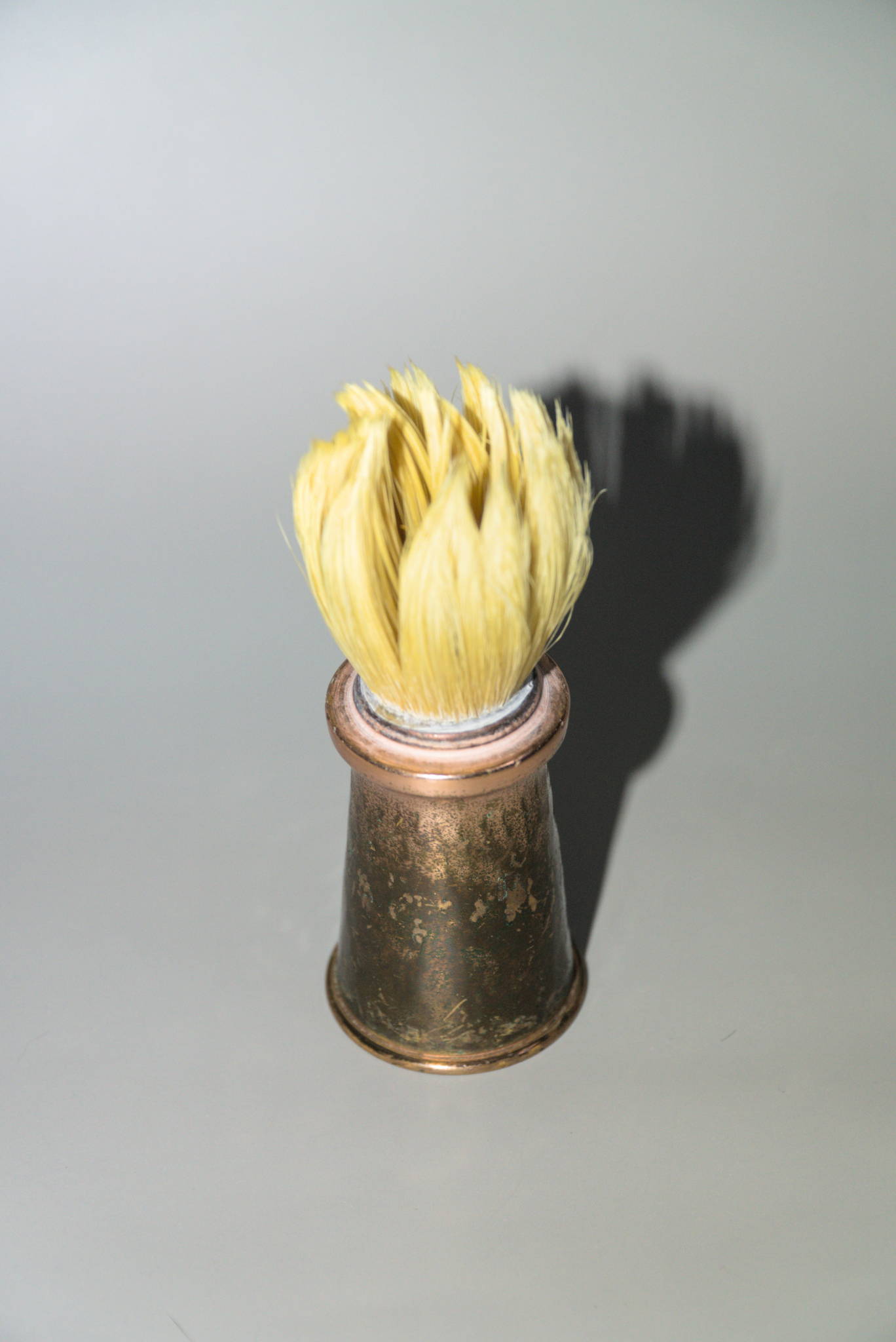
- 24mm Boar Hair Knot
- Main
- Drier than badger
- More texture than badger
- Generic copper handle
- From Etsy
- For holding a shaving knot of your choosing
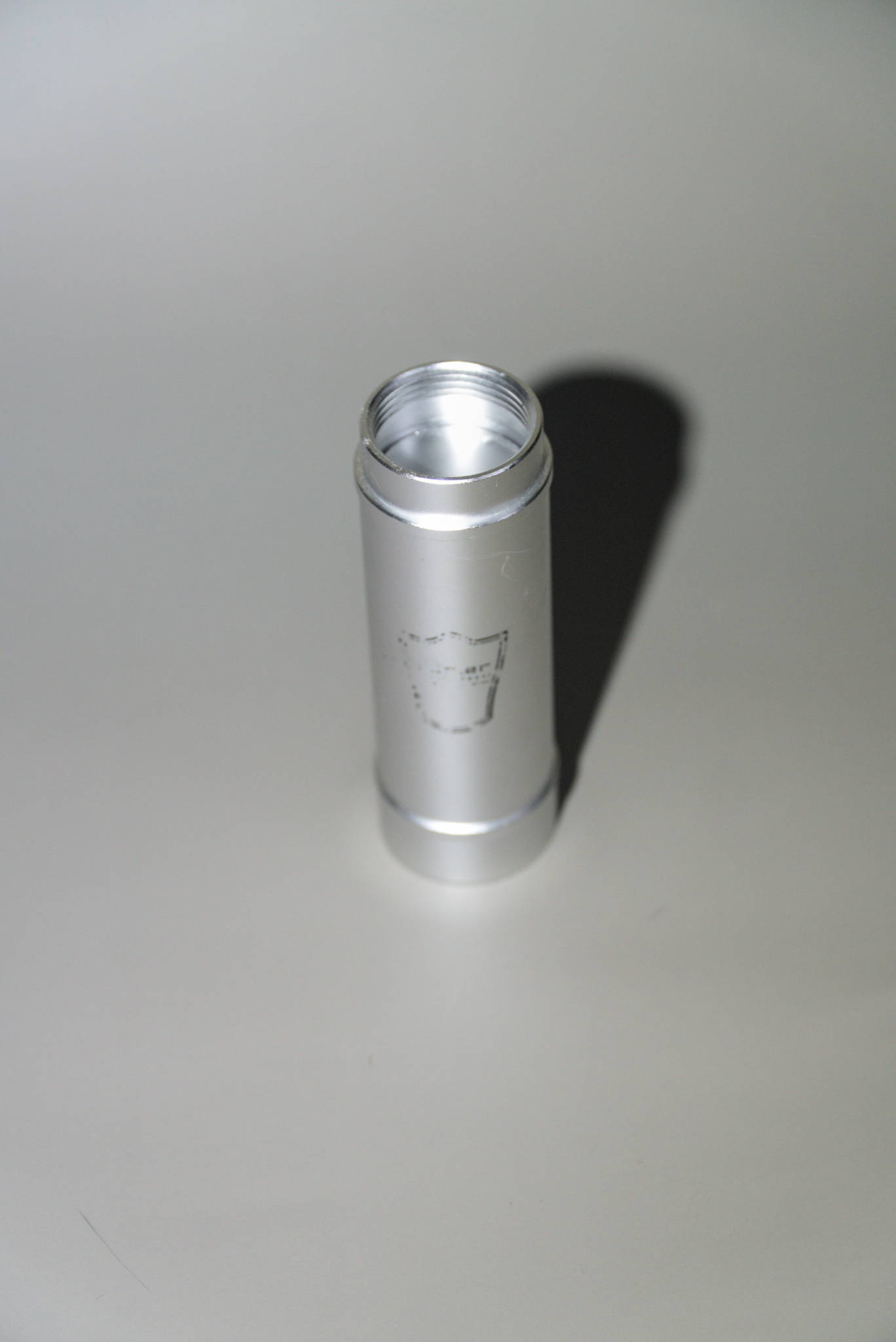
- Parker TRAVPB Shaving Brush
- Vented to better dry when stored
- Good, generic brush
- Great for travel
- 24mm Boar Hair Knot
- Bowls
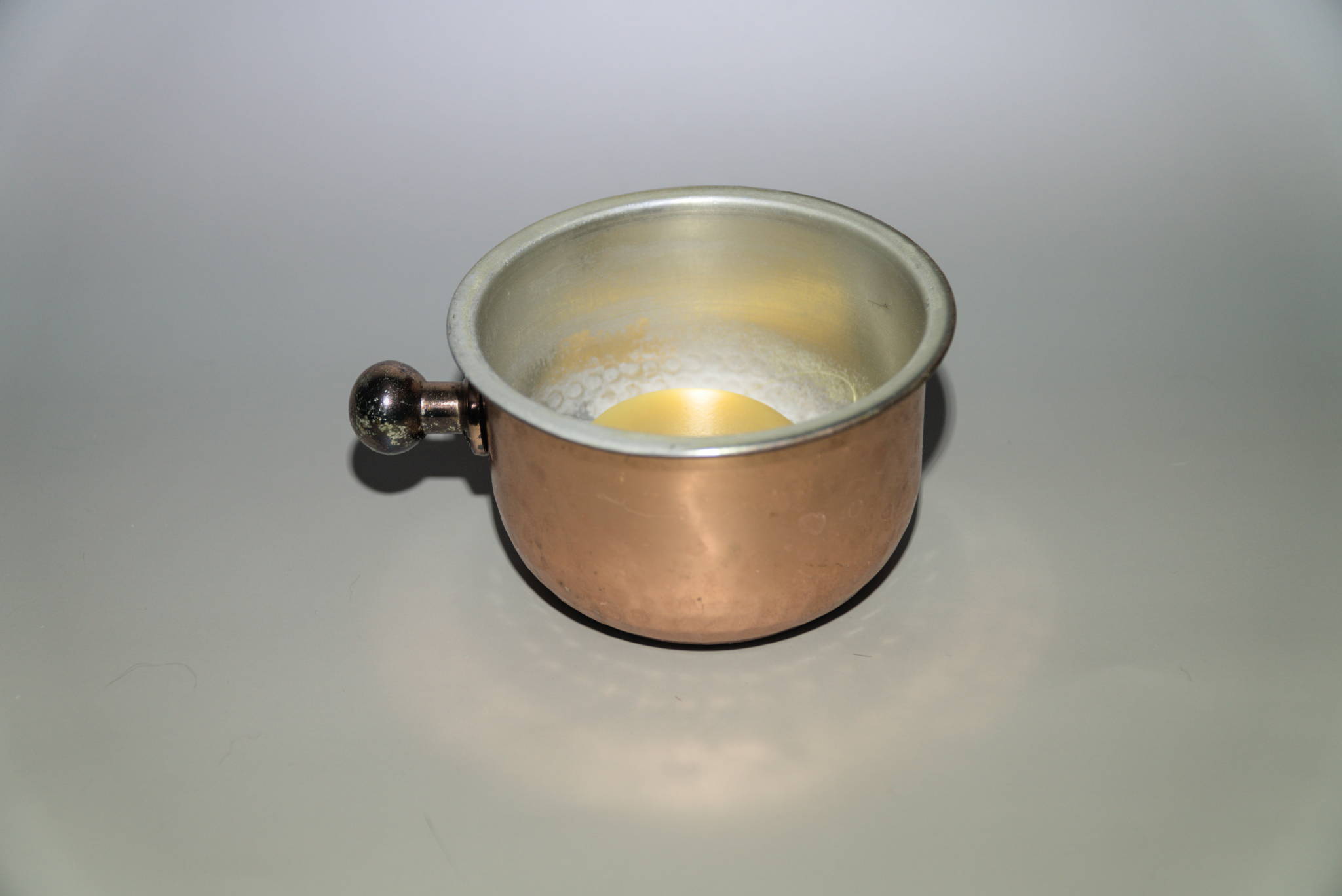
- Generic copper soap bowl
- From Esty
- Good for at home needs
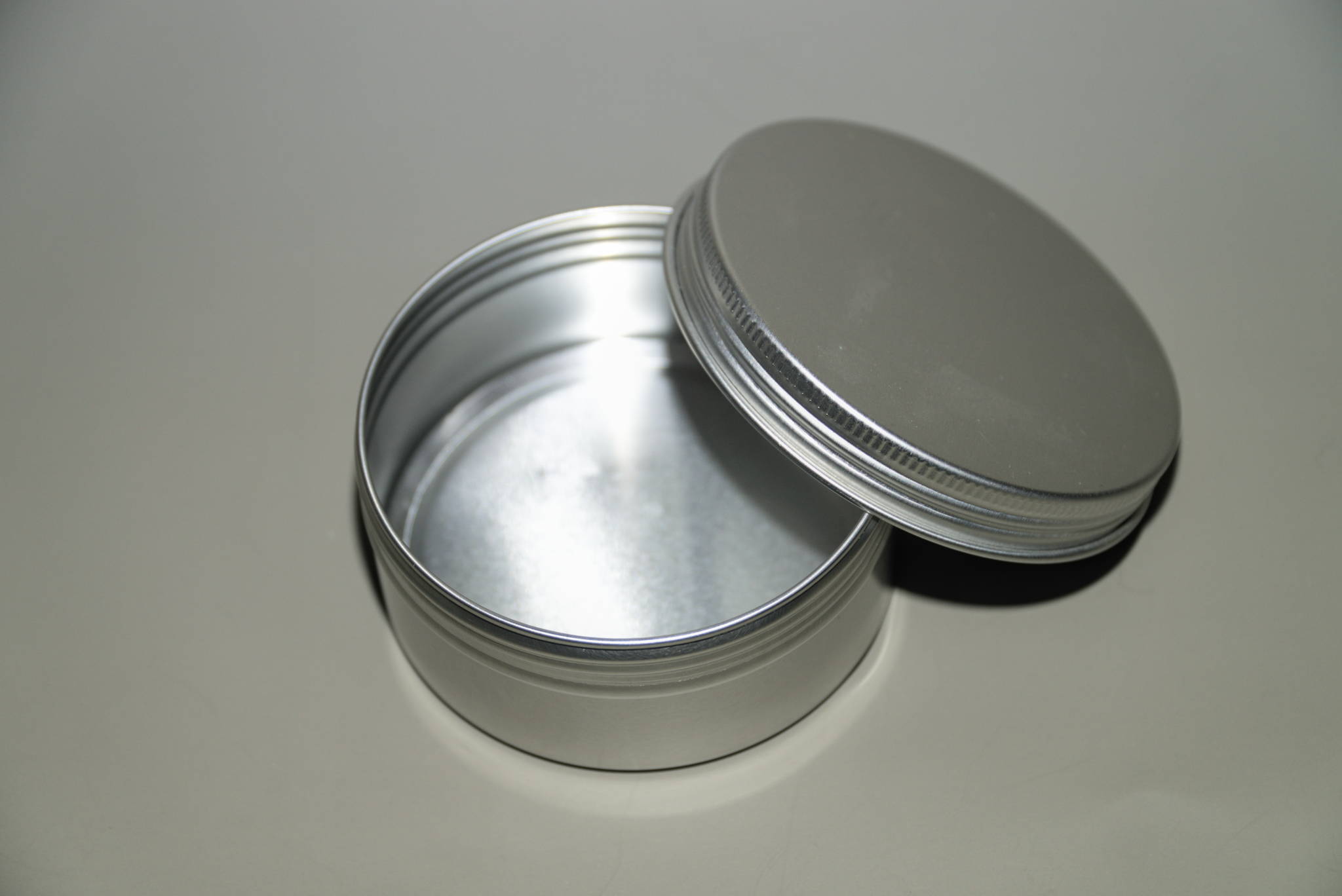
- Aluminum Screw Top Tin with Cover, 3.25" (travel)
- Holds a good sized chunk of bar soap
- Works well for travel
- Generic copper soap bowl
- Cases / Holders
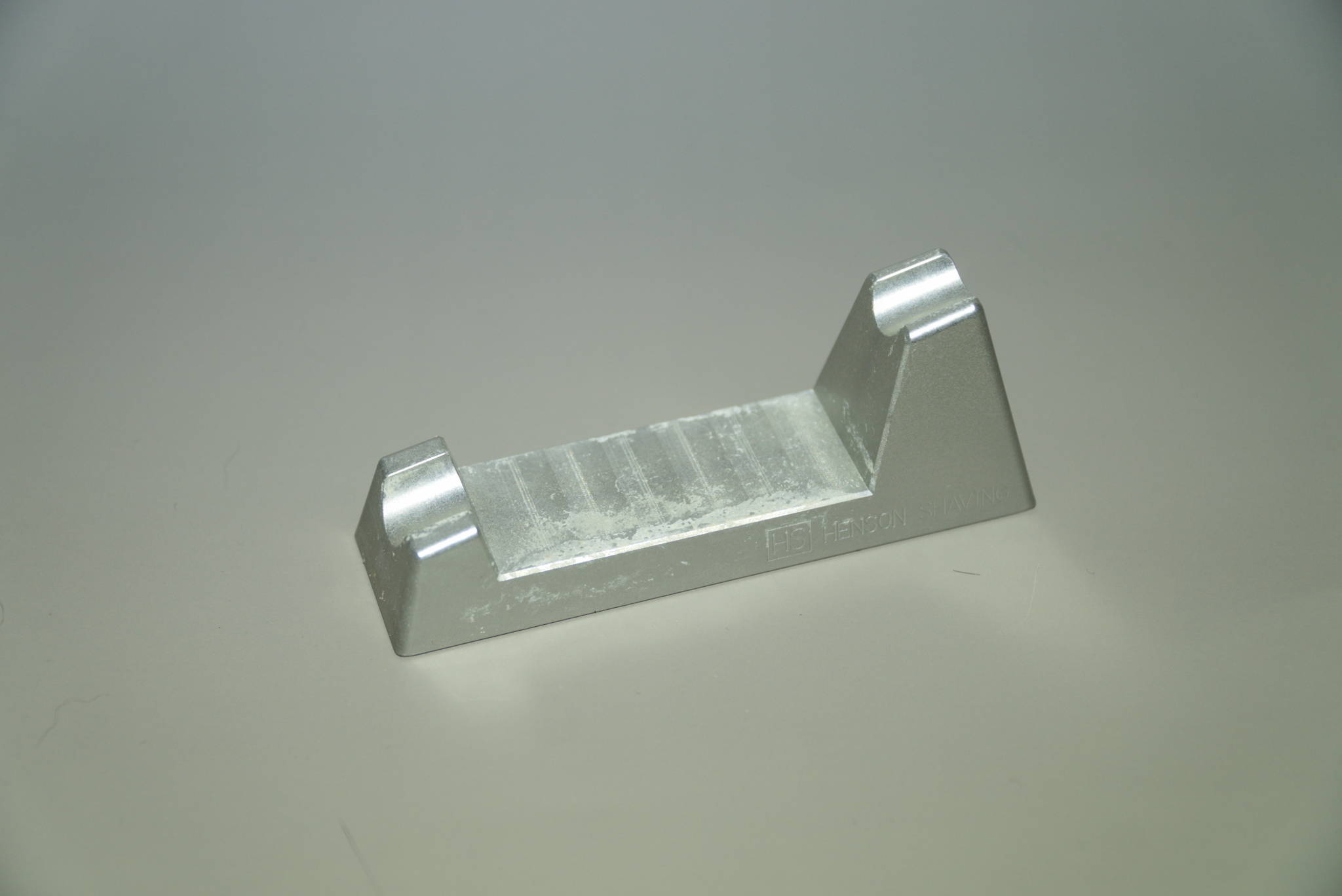
- Henson razor stand
- Great for keeping the razor head elevated
- Good for when storing razor in the shower
- Leather DE razor + blade holder
- From Etsy
- Great for travel
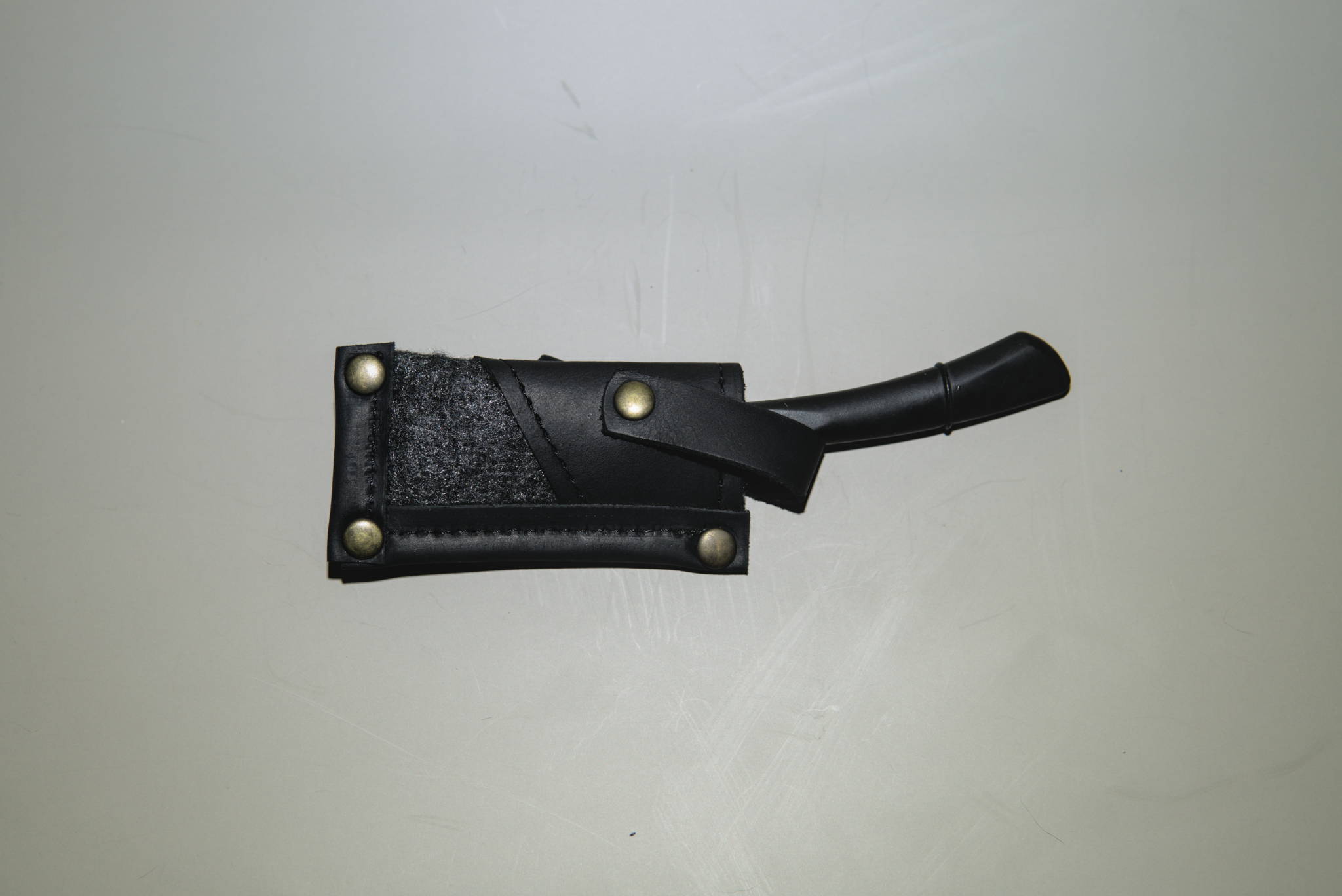
- Custom knife cover
- Great at keeping non-folding straight razors covered and safe
- Has ‘Custom size’ purchase option
- Henson razor stand
- Soap
Reference Info
During my prior research and prep for this post, I found some useful info that I felt should be included for reference.
Please be aware this information is for reference only. Razors have a lot of characteristics and variables beyond the basic information provided here.
This information should really only be used by the hardcore nerds that care about measurements and very fine details.
Rockwell 6C & 6S
| Plate | Type of Shave | Blade Gap |
|---|---|---|
| R1 | Gentle / Sensitive Skin | 0.20 mm / 0.008" |
| R3 | Gentle / Sensitive Skin | 0.48 mm / 0.019" |
| R2 | Daily Shave | 0.35 mm / 0.014" |
| R4 | Daily Shave | 0.61 mm / 0.024" |
| R5 | Aggressive | 0.69 mm / 0.027" |
| R6 | Aggressive | 0.79 mm / 0.031" |
Henson DE
| Model | Blade Exposure | Blade Gap |
|---|---|---|
| Mild (+) | 0.033mm / 0.0013" | 0.68mm / 0.027" |
| Medium (++) | 0.058mm / 0.0023" | 0.85mm / 0.033" |
| Aggressive (+++) | 0.11mm / 0.0045" | 0.99mm / 0.039" |
Gallery
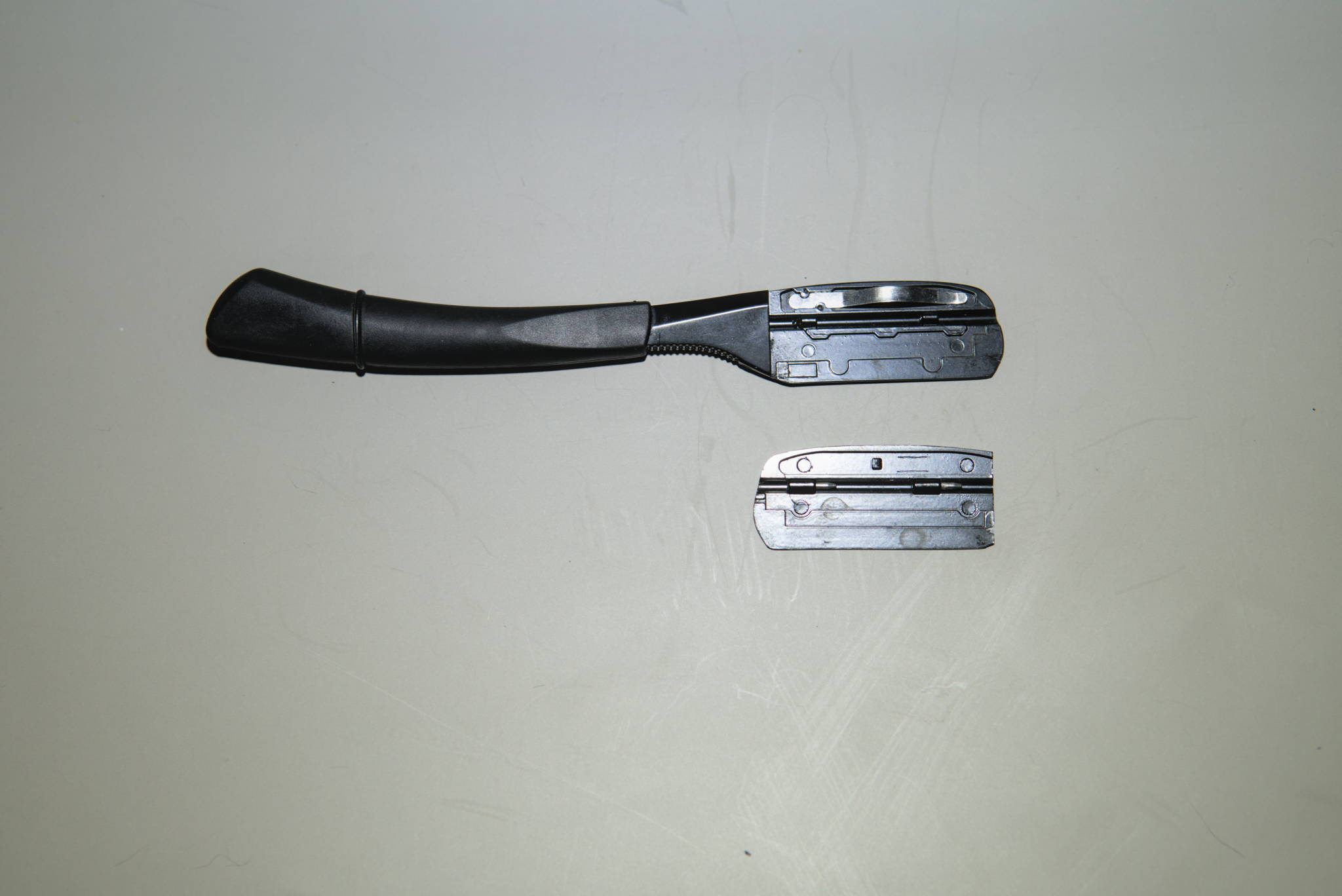
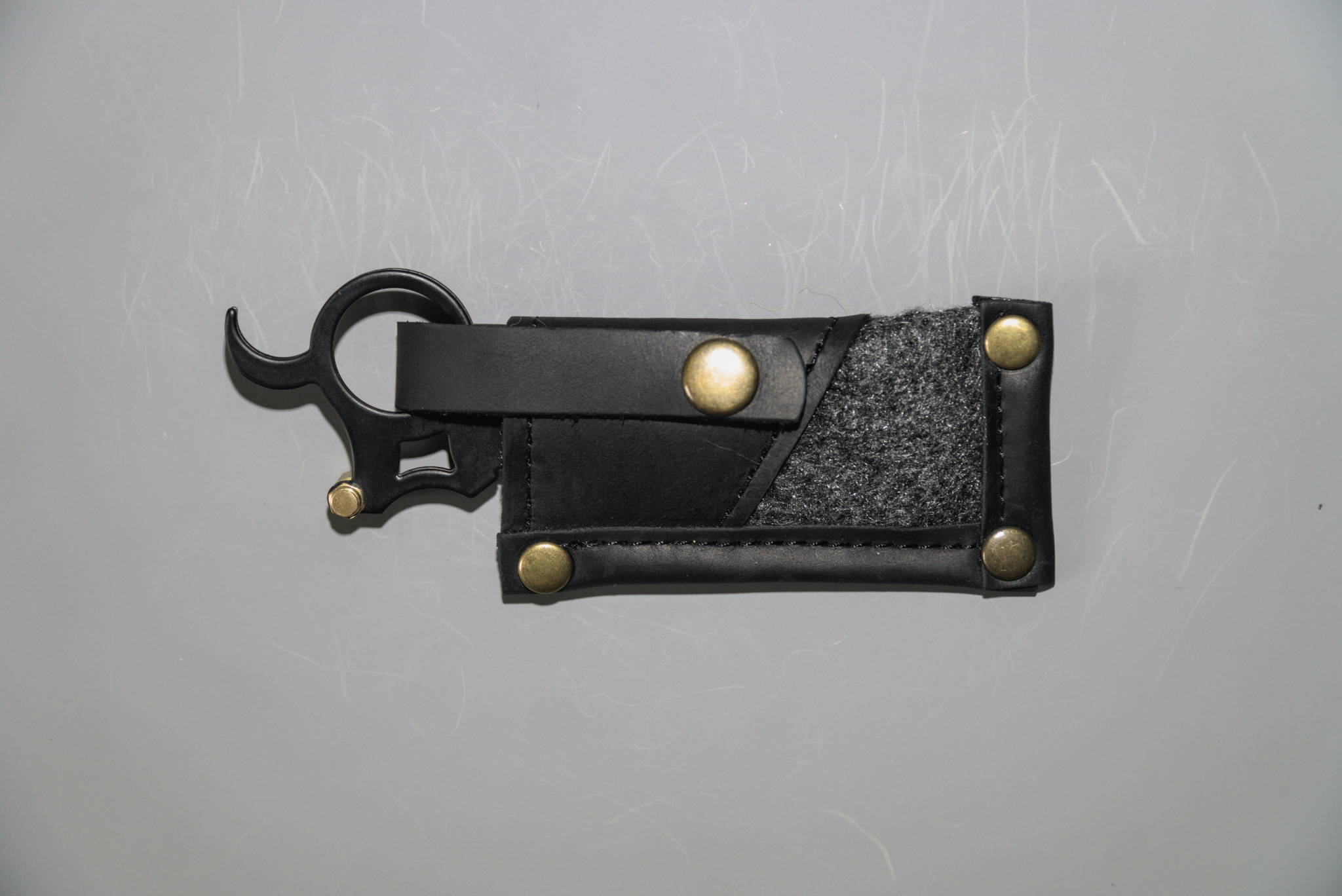
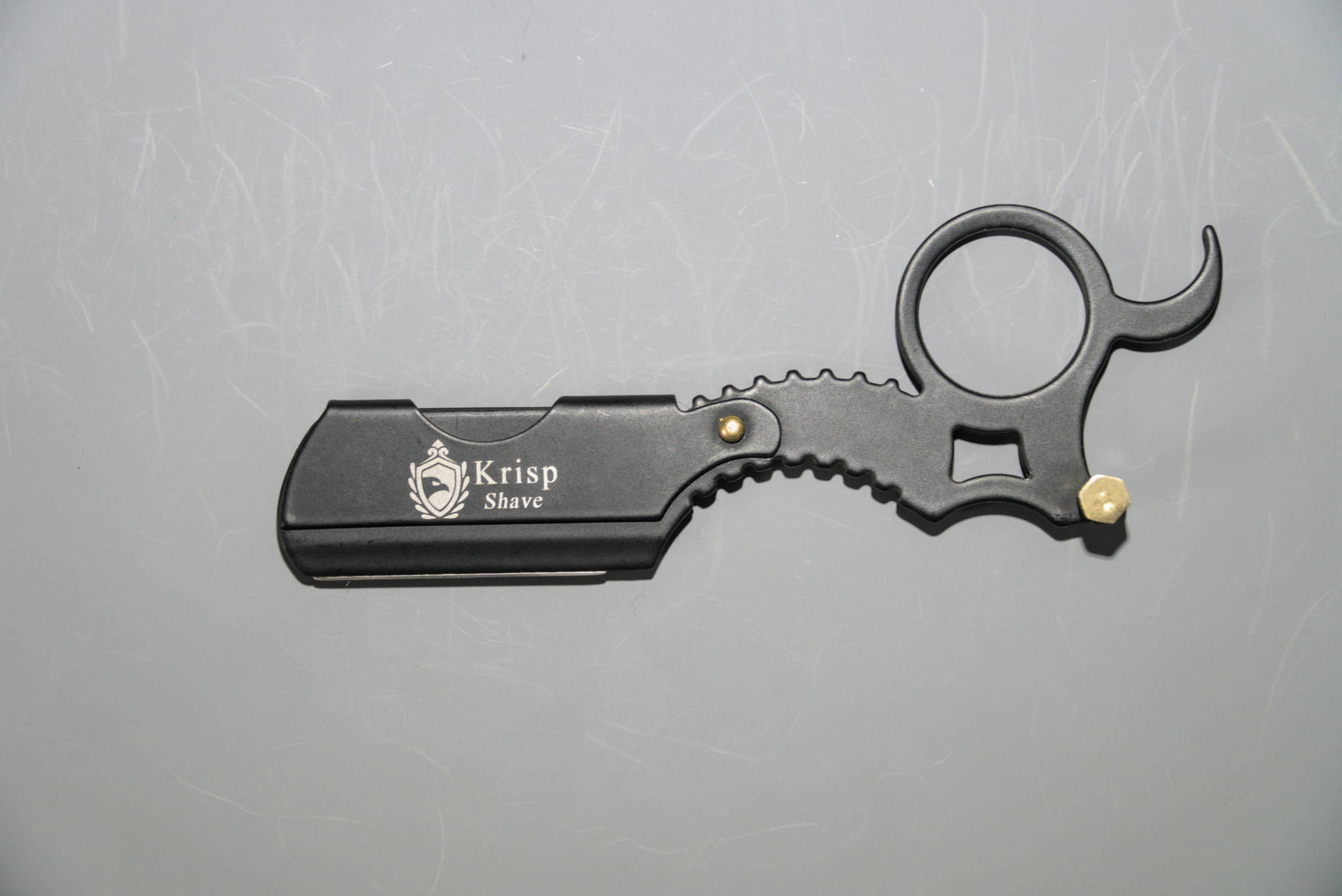
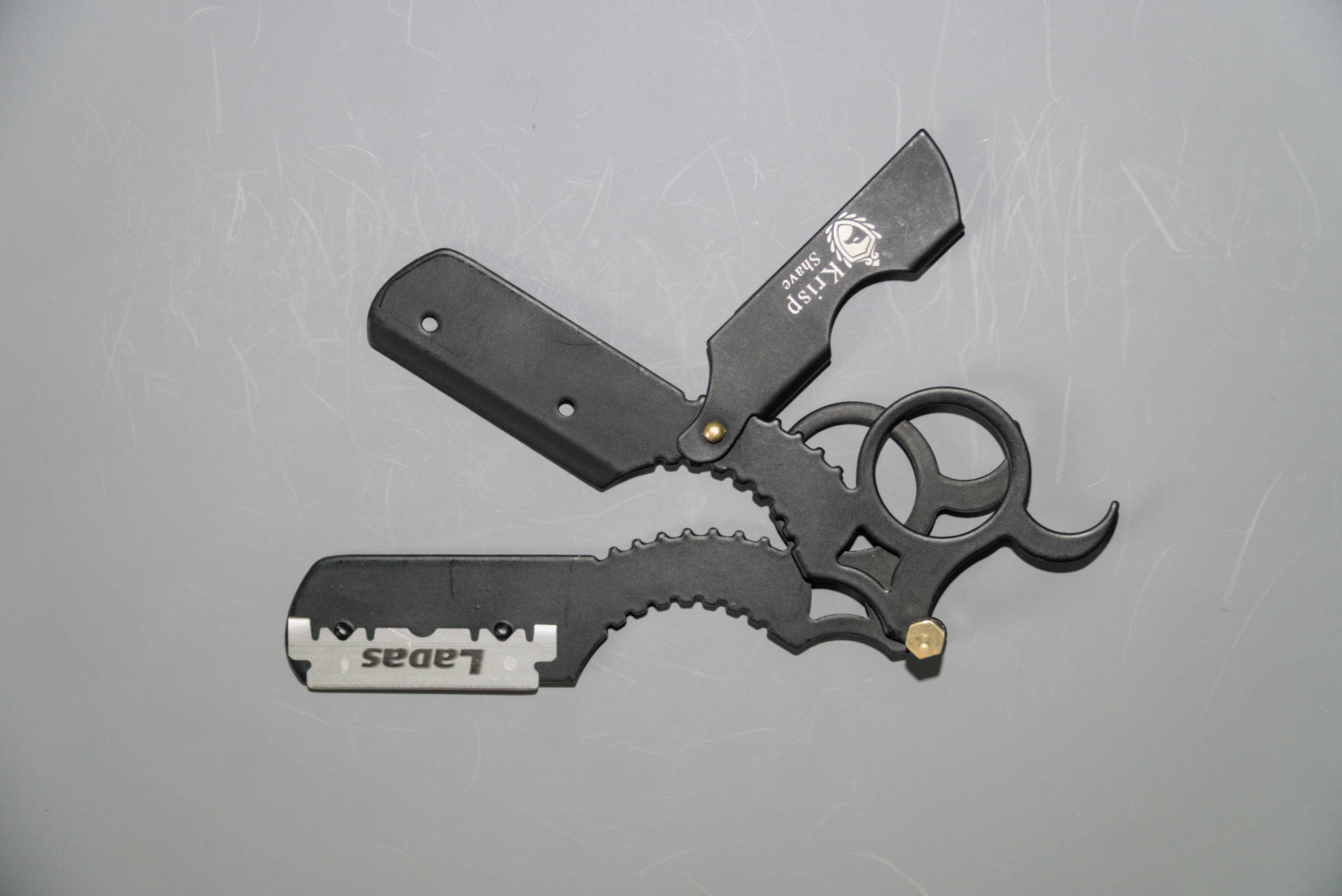
Below you’ll find some pictures of my current hardware.
Note: some of these items are not available for purchase anymore.